Thailand Good Place to Visit
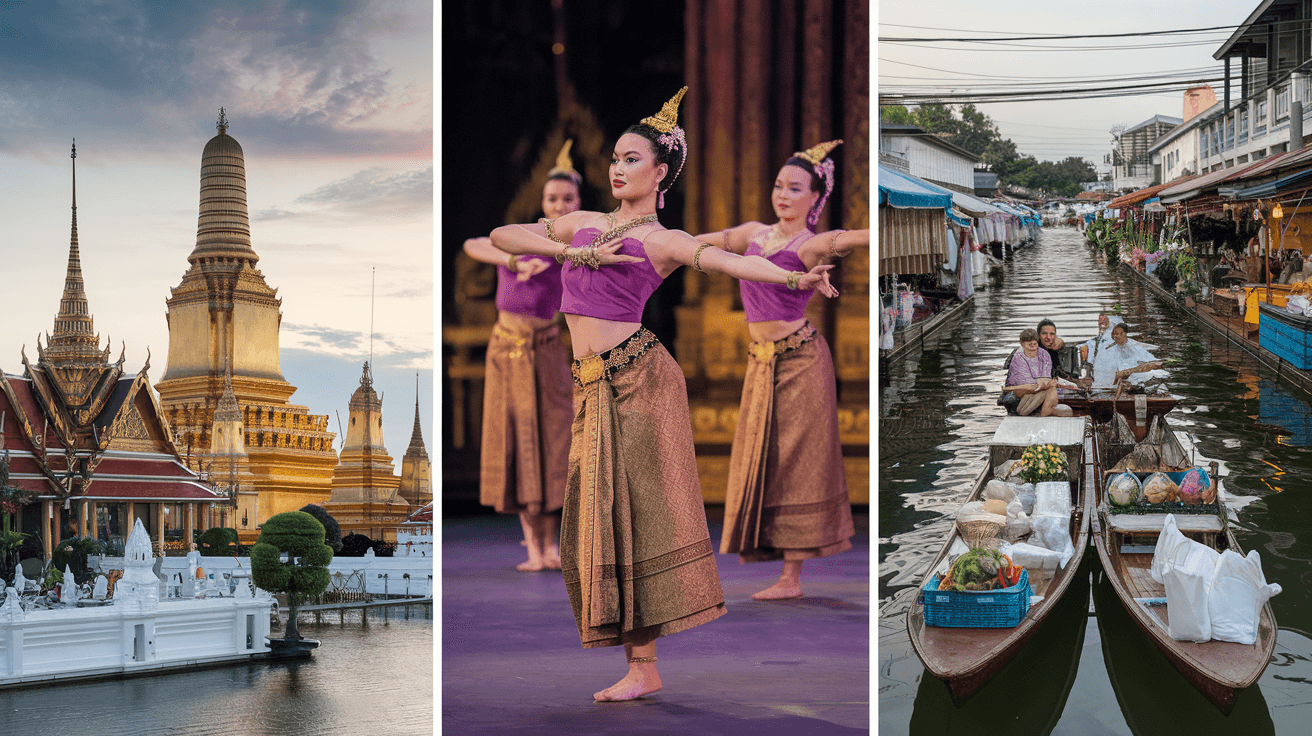
The Kingdom of Thailand is the most popular holiday travel destination in Southeast Asia because of its stunning natural scenery, comparatively cheap accommodation, renowned Buddhist hospitality, tropical white beaches, delicious food and temple architecture dating back to ancient dynasties.
The Thai people are mostly fun-loving, smiling and friendly, and holiday travel to Thailand is almost always a joy.
Thailand travel guide … The “Red Shirt” Puea Thai party won a landslide victory in Thailand’s national election on July 3, 2011, hopefully bringing an end to political unrest that has sparked occasionally violent street protests since early 2010. Puea Thai party leader Yingluck, the sister of former leader Thaksin Shinawatra, is Thailand’s first female prime minister in the wake of the July 2011 poll. However, thousands of protestors clashed with Bangkok police in November 2012 with dozens wounded amid renewed social opposition to the rule of Prime Minister Shinawatra.
About 15 million tourists visit Thailand every year and it’s worth noting there has been a big increase in female tourists since 2000, most attracted by the country’s fantastic shopping, cuisine, health facilities and spas. In 2012, Thailand tourist numbers leapt to 22 million and increasing into 2013, so Bangkok and many popular regional destinations such as Phuket and Koh Samui are crowded.
Best Place to Travel in Thailand
Places to Explore in Thailand
Places to Explore in Thailand … Don Muang Airport reopened for domestic flights in March, 2007, taking the pressure off Suvarnabhumi Airport. Don Muang Airport has restaurants, snack bars, souvenir shops and taxi services but a levy of 50 baht extra is charged. Don Muang (code DMKM / Suvarnabhumi is BKK) handles about 140 flights a day operated by One-Two-Go, Nok Air and Thai Airways International.
For holiday travel accommodation in the Thai capital of Bangkok, you can find an uncomfortable shared hovel for as little as 70 baht but 400 baht will get you a reasonable private hostel bed. A cheap guest house room will cost about 310 baht. Expect to spend at least 1,400 baht for an acceptable hotel room in Bangkok.
Khao San Road is a popular destination for budget backpack travellers and has numerous cheap guesthouses. However, Khao San is an Asian tourist mecca for Westerners and is generally seedy. Many holiday travellers prefer to visit Khao San Road as a tourist attraction in its own right, but not to stay there.
Look elsewhere off the beaten tourist track and you’ll find plenty of other districts in convenient locations with plentiful tourist and holiday travel facilities.
For example, the middle-class Thewet area just north of Banglamphu provides a more accurate reflection of the real Thai lifestyle. Guesthouse dorm room accommodation can be hired in Thewet for as little as 120 baht while a single room will normally cost from 250 to 400 baht.
What all this means is that a backpacker can travel rough for around 700 baht per day in Thailand including meals, accommodation and transport.
A more comfortable holiday with mid-range hotel accommodation and restaurants can be enjoyed for around 1,500 baht per day, although travel accommodation prices in Bangkok are usually much higher than elsewhere in Thailand.
Luxury hotels in Bangkok usually start around 2,000 baht per night.
For a hotel in a major city with restaurants, swimming pools, satellite television or direct room dialling, expect to pay between 2,500 and 3,000 baht per night for your holiday accommodation.
In smaller regional centres and towns, you can find similar hotel accommodation for less than half the price.
Thailand Spots to Visit — ✈️ Bangkok Airports: Suvarnabhumi and Don Muang
- Suvarnabhumi International Airport (BKK):
- Opened in September 2006, located east of Bangkok.
- Travel Tip: Study updated Bangkok maps before your trip to navigate from the airport to your accommodation or destination.
- Don Muang Airport (DMKM):
- Reopened for domestic flights in March 2007 to ease congestion at Suvarnabhumi.
- Offers restaurants, snack bars, souvenir shops, and taxi services.
- Note: A 50-baht surcharge applies to taxi rides from Don Muang.
- Handles ~140 flights daily, operated by One-Two-Go, Nok Air, and Thai Airways International.
Thailand Tourist Areas — 🏨 Accommodation Options in Bangkok
- Budget Travelers:
- Shared dorms start at 70 baht, but expect minimal comfort.
- A reasonable private hostel bed costs ~400 baht.
- Cheap guesthouse rooms average 310 baht.
- Mid-Range Comfort:
- Acceptable hotel rooms start at 1,400 baht.
- Luxury Stays:
- Luxury hotels begin around 2,000 baht per night.
- High-end amenities like pools, satellite TV, and in-room dialing cost 2,500–3,000 baht per night.
Thailand Places to See — 🏝️ Exploring Bangkok Districts for Accommodation
- Khao San Road:
- Popular with budget backpackers but known for its seedy atmosphere.
- Many travelers visit as a tourist attraction rather than staying there.
- Thewet (North of Banglamphu):
- Offers a more authentic Thai lifestyle experience.
- Dorm rooms: 120 baht.
- Single rooms: 250–400 baht.
- Beyond the Tourist Trail:
- Discover quieter districts with better value and local charm.
Bangkok Thailand Tourist Attractions — 💸 Thailand Travel Budgets
- Backpackers:
- Live rough for 700 baht per day, covering meals, accommodation, and transport.
- Mid-Range Travelers:
- Enjoy more comfort for 1,500 baht per day.
- Prices in Bangkok tend to be higher than in other regions.
- Luxury Travelers:
- Indulge in upscale accommodations and experiences for 2,000–3,000 baht per night.
- Regional Price Differences:
- Similar hotel amenities in smaller towns are often available for less than half the price compared to Bangkok.
Nice Places to Go in Thailand — 🛫 Plan Your Thailand Holiday Wisely
From bustling Bangkok to serene regional towns, Thailand offers a variety of travel experiences. Whether you’re a budget backpacker or seeking luxury, understanding the local costs and options ensures a smooth and enjoyable journey.
Places in Thailand to Travel: Transport, Tipping, and Safety
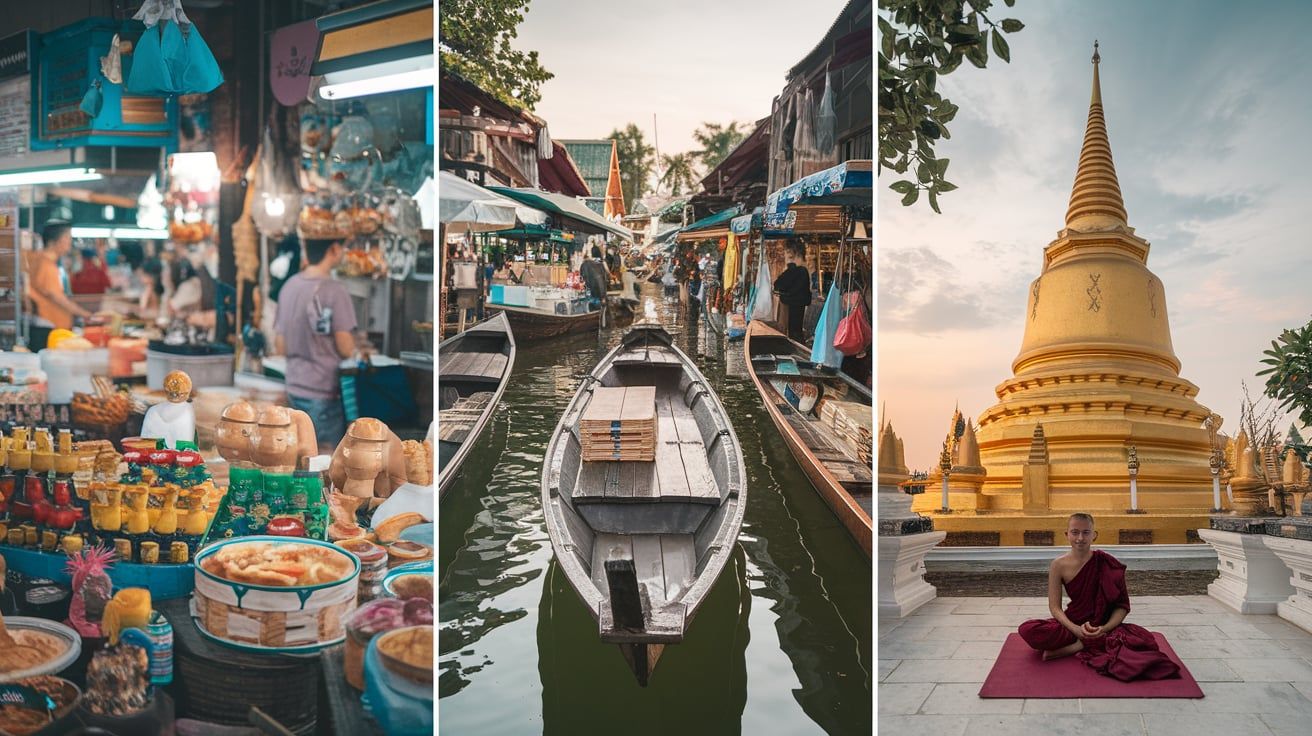
It’s not customary to tip in Thailand, although it’s becoming common in swanky hotels and restaurants.
Thailand has an extensive bus network covering most domestic and international routes. It has one of the best rail networks in South East Asia, penetrating all regions of the country. Trains are comfortable, reasonably priced and usually on time, but a little slow. Hua Lampong Station on the outskirts of Chinatown in central Bangkok has a ticket office and is the hub of all rail travel in Thailand. Thai trains are classed as Ordinary, Rapid or Express, the latter having the best seating and facilities. Travelling third class is both the cheapest and best way to become familiar with the Thai people, although it usually involves wooden bench seating and no airconditioning. It’s advisable to book train tickets several days in advance, longer if there’s a national holiday looming, but you cannot reserve a seat more than one month in advance.
The cheap buses are uncomfortable but fast and some buses are for women only because of the crime and sexual harassment that plague mixed passages.
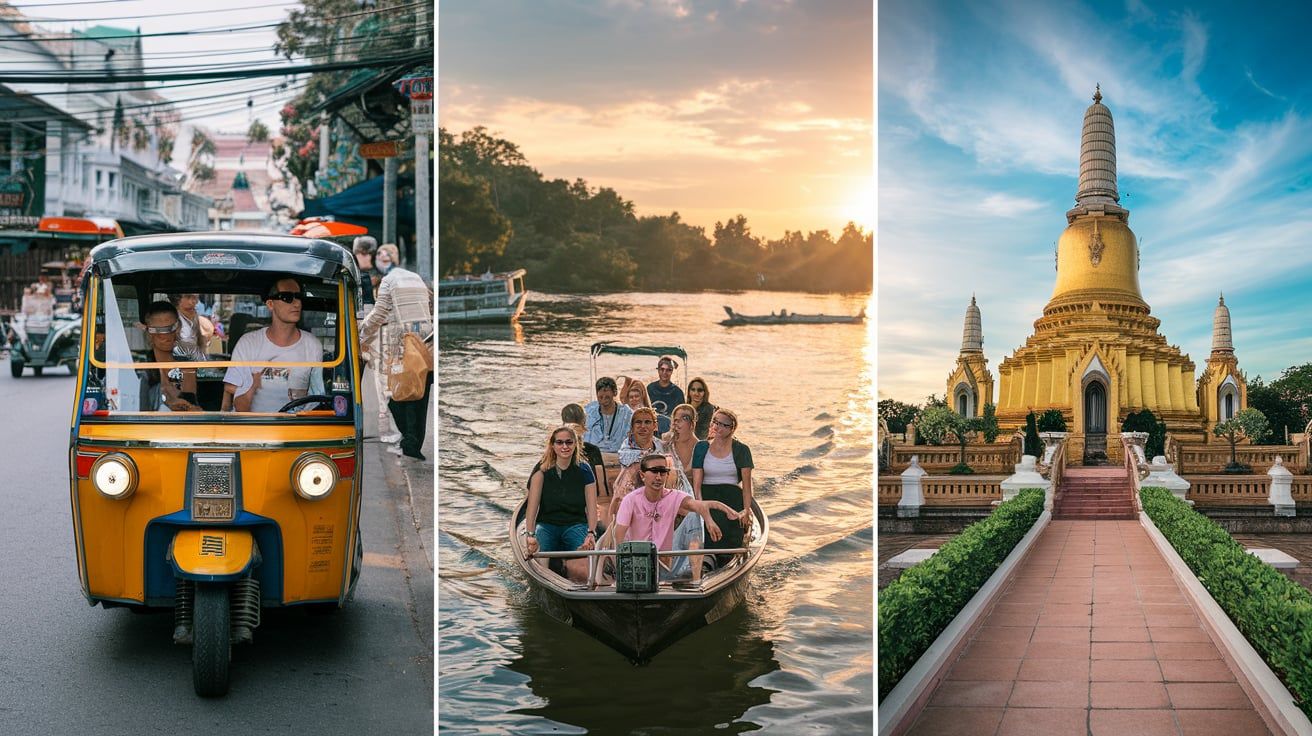
Dependent upon your Thailand holiday travel budget, you can tour around by hiring a tuk-tuk (rickshaws with motors) a samlor (a bicycle rickshaw), a songthaew (a small pickup truck) or a taxi, the latter usually metered in Bangkok but less so in the rest of Thailand.
The other transport modes mostly require some bargaining to settle on a fare before you travel.
Traffic in Thailand drives on the left side of the road and if you hire any sort of vehicle or bike, beware that Thai drivers are notoriously independent and dangerous. Be particularly careful driving at night.
Bangkok’s Mass Transit System, better known as the Skytrain, has two lines with 23 strategically-positioned stations covering 23.5 kilometres through the city. These air-conditioned trains are a rapid and cheap way to get around the city while enjoying the scenery from an elevated position. The Skytrain runs from 6am to midnight and the central station of Siam Square provides access to Bangkok’s busiest shopping area. Tickets cost 15 baht for one stop and 40 baht for up to 120 minutes of journey on the same day covering one or more destinations. There are English announcements on the train for each stop.
A 20 kilometre subway with 18 stations opened in Bangkok in 2004, running from 5am to midnight at dirt cheap prices. The new subway trains travel at 35kmh and arrive every few minutes, creating a much more convenient and less stressful way of getting around central Bangkok during your Thailand holiday travel.
Beware of traffic in Thailand as the national road toll is horrendous. There are more than 12,000 road deaths each year in Thailand, or about one life lost per hour.
If you want to escape the frantic crowds of Bangkok, Lumpini Park is a calm public green space with two lakes in the heart of the city, a short walk from the centrally located Sala Daeng skytrain station. The park opens at 6am and closes at 7pm.
💰 Tipping in Thailand
- Tipping Customs:
- Not traditionally expected in Thailand.
- Becoming common in luxury hotels and restaurants.
🚍 Transportation in Thailand
Extensive Bus Network:
- Covers most domestic and international routes.
- Budget Option: Cheap but often uncomfortable.
- Some buses are designated for women only to prevent harassment.
Rail Travel:
- One of the best rail networks in Southeast Asia.
- Train Classes:
- Ordinary: Basic facilities.
- Rapid: Improved speed and comfort.
- Express: Best seating and amenities.
- Third-Class Experience:
- Cheapest way to interact with locals.
- Expect wooden benches and no air conditioning.
- Booking Tips:
- Book tickets several days in advance.
- Seats cannot be reserved more than one month ahead.
- Hua Lampong Station:
- Located near Chinatown in central Bangkok.
- Serves as the hub for Thailand’s rail network.
🛺 Alternative Transport Modes
- Tuk-Tuks (Motorized Rickshaws): Iconic and fun, but fares require bargaining.
- Samlors (Bicycle Rickshaws): Eco-friendly and traditional.
- Songthaews (Pickup Trucks): Affordable shared transport.
- Taxis:
- Metered in Bangkok, but less common in other regions.
- Agree on a fare in advance if no meter is available.
Skytrain (BTS):
- Features:
- Air-conditioned, elevated rail with scenic city views.
- Two lines, 23 stations, covering 23.5 km.
- Operating Hours: 6 AM – Midnight.
- Costs:
- 15 baht for one stop.
- 40 baht for up to 120 minutes across multiple destinations.
- Central Station: Siam Square, ideal for access to Bangkok’s shopping hubs.
- English Announcements: Available for each stop.
Bangkok Subway (MRT):
- Opened in 2004, with 18 stations covering 20 km.
- Features:
- Operates from 5 AM – Midnight.
- Trains run every few minutes at speeds up to 35 km/h.
- Cheap fares, offering stress-free city travel.
🚦 Road Safety in Thailand
- Driving Tips:
- Traffic drives on the left side.
- Be cautious, especially at night, as Thai drivers can be unpredictable.
- Road Toll:
- Over 12,000 road deaths annually, averaging one death per hour.
- If you rent a vehicle or bike, ensure adequate insurance coverage.
🌳 Escape the Crowds: Lumpini Park
- Features:
- A tranquil green space with two lakes in central Bangkok.
- A short walk from the Sala Daeng Skytrain Station.
- Operating Hours: 6 AM – 7 PM.
- Perfect for a peaceful break from Bangkok’s busy streets.
🛤️ Thailand Travel Tips Summary
Thailand’s extensive transport options, from iconic tuk-tuks to modern rail systems, make exploring the country both exciting and accessible. Whether you’re navigating Bangkok’s bustling streets or seeking a calm retreat in Lumpini Park, understanding local customs and safety is key to enjoying your holiday.
Good Places to Visit in Thailand: Weather, Culture, and Geography
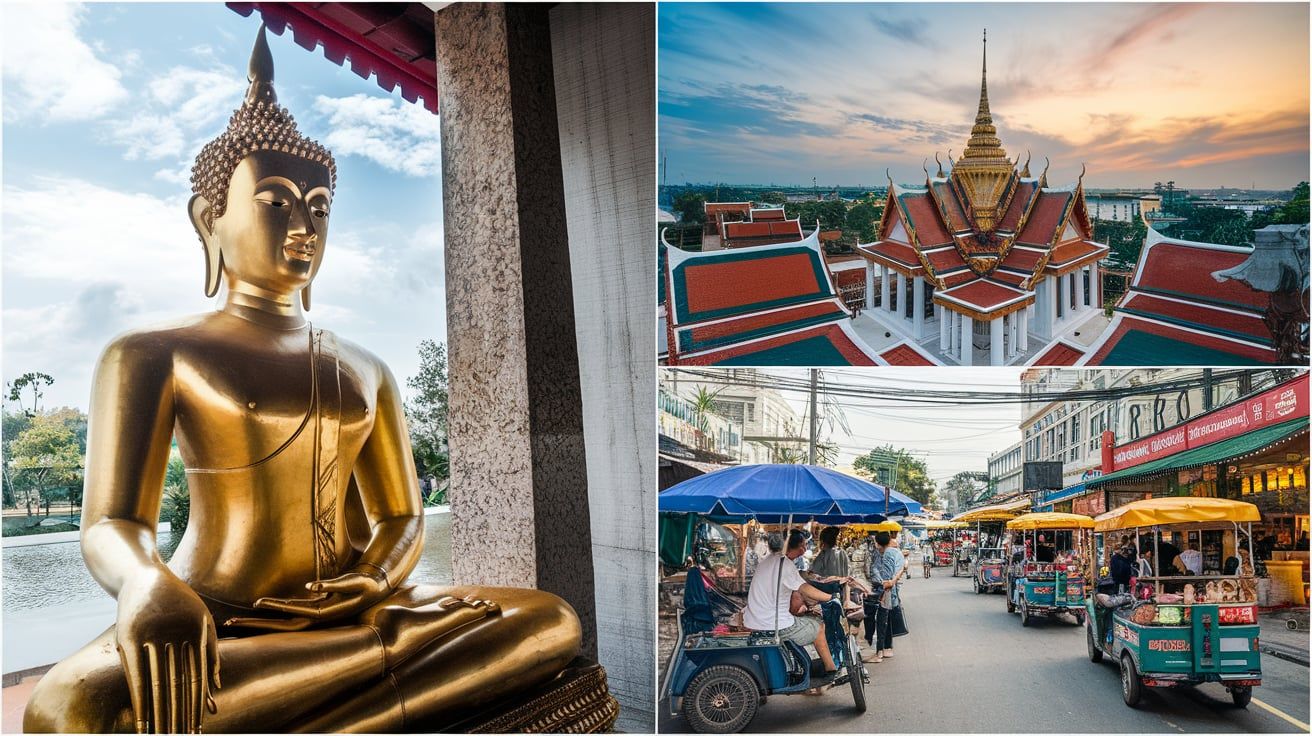
Thailand (known as Siam until 1939) is one of the few Asian countries never colonised by the West. As a result, its people have retained much of their authentic culture.
The country is a democratic constitutional monarchy, covers 517,000 square kilometres with 3,219 kilometres of coastline, and has a population around 67 million. About seven million live in the capital, Bangkok (pictured above), although the unofficial figure is more than 10 million. Bangkok itself was founded in 1782.
About three out of every four citizens is an indigenous Thai and about nine out of ten are Buddhists.
The most enjoyable hot, dry weather for holiday travel in Thailand is from February to June.
The hottest time of year is usually the third week in April when the temperature often hits 42 degrees Celsius, unless there is heavy cloud or rainstorms.
The peak summer temperature often exceeds 40 degrees Celsius in towns such as Tak, Lampang and Kanchanaburi. The highest temperature ever recorded in Thailand was 44.5 degrees Celsius in the town of Uttaradit in 1960, while the town of Tak saw 43.7 degrees Celsius in 1998, the third-hottest day in Thailand’s history.
Monsoons dominate Thailand’s climate and you can expect a rainy holiday from May/June till November, although brief showers are possible at any time of the year.
The most comfortable time for holiday travel in Thailand is from November to February.
The north of Thailand is baking hot from March to May, average temperatures in the mid 30s Celsius.
The rainy season from June to November is very humid and showers are usually torrential but brief. Flash flooding and muddy landscapes are an obstacle to holiday travel in various parts of Thailand during this season.
In the north during the cool season from November to February, the weather can be quite chilly. Winter in Bangkok is essentially December and January.
🇹🇭 A Brief History and Culture
- Name and Independence:
- Formerly known as Siam until 1939.
- One of the few Asian countries never colonized by the West.
- Authentic Culture:
- Retained much of its indigenous traditions due to avoiding colonization.
🌏 Geography and Population
- Land Area: 517,000 square kilometers.
- Coastline: 3,219 kilometers.
- Population: Around 67 million.
- About 7 million live in Bangkok, though unofficial estimates suggest over 10 million.
- Capital: Bangkok, founded in 1782.
🌸 Demographics and Religion
- Ethnicity:
- Approximately 75% indigenous Thai.
- Religion:
- About 90% Buddhist, making it a key aspect of Thai culture and society.
☀️ Weather and Best Travel Seasons
Holiday Travel Seasons in Thailand:
-
Hot Season (February–June):
- Ideal for holiday travel.
- Peak temperatures often hit 42°C in April.
- Notable hot spots: Tak, Lampang, Kanchanaburi.
- Record high: 44.5°C in Uttaradit (1960).
-
Rainy Season (May/June–November):
- Dominated by monsoons, with torrential yet brief showers.
- Common challenges: Flash flooding and muddy terrains.
- High humidity levels may be uncomfortable for some travelers.
-
Cool Season (November–February):
- Most comfortable time for holiday travel.
- Northern Thailand:
- Chilly weather during this period, especially at night.
- Bangkok Winter:
- Limited to December and January.
Regional Temperature Highlights:
- North Thailand:
- Baking hot from March to May, with average temperatures in the mid-30°C range.
🌦️ Travel Tips for Thailand’s Climate
- Plan Ahead:
- Choose November–February for a comfortable and enjoyable vacation.
- Avoid the rainy season if you prefer dry landscapes and easier mobility.
- Prepare for Heat:
- Stay hydrated and protect against the sun if visiting during the hot season.
- Embrace the Rain:
- Carry a raincoat or umbrella if traveling between May and November.
🗺️ Key Takeaways for Your Thailand Holiday
Thailand offers a rich blend of history, culture, and diverse climates to explore. From the baking hot north to the cool seasons in the south, each travel season provides unique experiences. Plan your visit based on the weather, and prepare to immerse yourself in the authentic Thai way of life.
Places to Visit Bangkok: Attractions, Culture, and Practical Tips
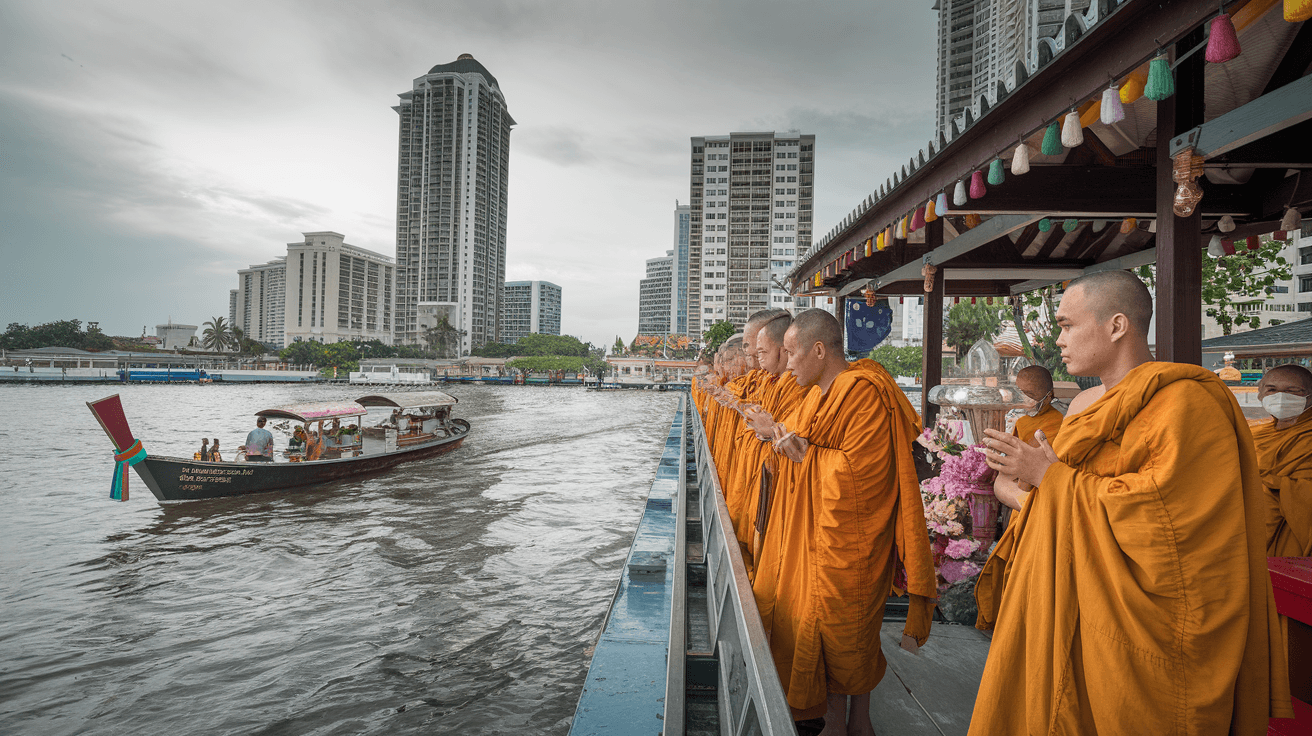
The capital of Bangkok has various tourist attractions, many involving sex, but this city of 10 million (seven million officially in 2011) is crowded and polluted. It’s reported that about a dozen policemen die in Bangkok each year from respiratory problems caused by pollution. The traffic jams are enormous and development since the 1950s is causing the city to sink at 12 centimeters per year.
However, Bangkok has been transforming itself in recent years and the city nowadays has its own bustling, overcrowded, smoggy charm, typified by its lacework of canals (called klongs) and the 400 domes and spires of Buddhist temples and golden pagodas that pepper the city and suburban skyline. Arguably the most iconic and famous of Bangkok’s landmarks is the Temple of Dawn, or Wat Arun, boasting a 67 metre tall pagoda on the banks of the Chao Phraya River.
It’s worth noting that in central Bangkok, some of the locals get around wearing white masks for protection from vehicle exhausts.
For many travellers, Bangkok nightlife is focused on girlie bars - often in the Patpong area where you’re likely to be conned. However, there are plenty of alternatives such as theatre or traditional Thai kickboxing.
A drawcard is the Traditional Thai Puppet Theatre which offers an enthralling 75 minute show starting at 7.30pm throughout the week. The Joe Louis puppet theatre is close to the Suan Lum Night Bazaar and restaurants of the Lumpini district. The theatre is closed in 2011 and will reopen in 2012 in a new riverfront bazaar (entry 900 baht adults, 300 baht children in 2011).
Another major theatre venue is the 2,000-seat Siam Niramit at Huay Kwang near the Thai Cultural Centre. The theatre presents a musical covering Siamese-Thai history with 2011 admission at 1400 baht for adults and 900 baht for children.
Other classical Thai performing arts venues are the Patraveadi Theatre complex, the Chao Phraya Cultural Centre near Sathorn Bridge, the Sala Rim Nam, Supatra Riverhouse and the Sala Chalermkrung theatre at the corner of Charoen Krung and Triphet roads.
Thai kickboxing tournaments can be seen at Lumpinee Boxing Stadium (Rama IV Rd) on Tuesdays and Fridays from 6.30pm and on Saturdays from 5pm and 8.30pm.
The Grand Palace is a huge Buddhist shrine and its golden wat spires draw large crowds of tourists who want to see what is regarded as one of the most impressive architectural feats in Asia. If you visit the Grand Palace, which is a former royal residence established in 1782 and set over almost 220,000sqm, don’t try to photograph the tiny famed Emerald Buddha or a guard might confiscate either your memory card or your camera. In 2011, the Grand Palace was open every day from 8.30am to 3.30pm and entry was 350 baht for foreigners. Note that there is a strict dress code for visiting the Grand Palace.
Near the Grand Palace is the Wat Pho temple, perhaps the most impressive monument in Bangkok. Wat Pho houses the Reclining Buddha, a 46 metre stutue built in 1832 of a reclining Buddha coated with 24 carat goldleaf, its soles inlaid with mother-of-pearl and inscriptions. The temple is open every day from 8am to 5pm with a one hour midday break. Visitors must remove their shoes upon entrance. Revealing tops and shorts are banned but sarongs are usually available at the ticketing office for women. Wat Pho also houses several smaller shrines and expert massages are available for a small charge. The Wat Pho entrance is on Chetuphon Rd and entrance in 2011 was 50 baht.
Another of Bangkok’s popular shrines is Erawan Shrine at the corner of Ratchadamri and Ploenchit roads in front of the Grand Hyatt Erawan Hotel.
Also worth checking is the Suan Pakkad Palace in Si Ayutthaya Road, where you can admire prehistoric relics such as bronze spearheads and bracelets, pottery and traditional Thai housing, much of it collected from the Ban Chiang region of northern Thailand. Entry to Suan Pakkad Palace in 2011 was 100 baht.
The Chao Phraya River is a great place to escape the hustle and bustle of Bangkok’s city life. It’s also a great way to quickly travel through Bangkok and admire the city’s historic temples and architecture on either an express ferry or a tourist boat.
Tourists can buy a one day river pass that allows them to hop on and off the Chao Phraya Tourist Boats at any of nine piers on the Chao Phraya river - Saphan Taksin at the end of the Silom Line using Bangkok’s Skytrain; Si Phraya near the River City Shopping Centre; Ratchawongse near the entrance to Bangkok’s Yaowaraj, or Chinatown; Memorial Bridge built in 1932 to commemorate King Rama I; Tien for access to the Wat Pho, the biggest Buddhist temple in Bangkok (open 8am to 5pm); Maharaj to get to the Grand Palace built in 1782 (open daily from 8.30am to 3.30pm with dress codes); Wang Lang near the Royal Barge Museum; and Phra Arthit which is near Phra Sumane Fort, one of two remaining fortresses built in the 18th century.
The Chao Praya Tourist Boats have commentators and fly an orange flag. Chao Phraya Tourist Boat day passes allow unlimited trips for the day and in 2011 cost 100 baht. Bangkok’s regular ferries, which fly a blue flag, are cheaper but less comfortable.
Cruise ships on the Chao Praya River are popular for the 150 kilometre voyage to the ancient capital of Ayutthaya, which in the 16th century was an important trade link for India and China with a population around one million.
Street food in Bangkok is generally safe and very cheap. There are numerous great locations to eat around Banglamphu, also known as Backpacker Central. Stalls along Khao San Road have good food but if you want to escape the hawkers, look into spots such as the eastern end of Thanon Rambuttri, adjacent to Khao San Road. Delicious meals here cost between 20-70 baht, while a Chang beer costs about 45 baht. Another excellent destination for street food, particularly fried rice stalls, is Thanon Chakrapong. Even cheaper food can be bought from the many pushcart vendors who can always be found outside all the Metro and Skytrain stations.
Bangkok Thailand Tourist Attractions — 🛶 A City of Contrasts
Bangkok, the bustling capital of Thailand 🇹🇭, is home to 10 million people (7 million officially in 2011). While its vibrant energy is magnetic, the city also faces challenges:
- 🚗 Traffic jams are notorious.
- 🌫️ Pollution claims the lives of about a dozen policemen annually due to respiratory issues.
- ⬇️ The city sinks at 12 cm per year due to rapid development since the 1950s.
Despite these issues, Bangkok offers its own overcrowded, smoggy charm with:
- 🌀 A lacework of canals (klongs).
- 🛕 400 domes and spires of Buddhist temples and golden pagodas.
- 🏯 The iconic Temple of Dawn (Wat Arun) with its 67-meter pagoda by the Chao Phraya River.
🌃 Nightlife in Bangkok
Bangkok’s nightlife offers something for everyone:
-
Girlie Bars in Patpong 🙅♂️ (often a scam hotspot).
-
🎭 Theatrical Experiences:
- Traditional Thai Puppet Theatre:
- 📍 Close to the Lumpini district.
- 🎟️ (2011 prices) Adults: 900 baht, Children: 300 baht.
- ⚠️ Closed in 2011, reopened in 2012 at a new riverfront bazaar.
- Siam Niramit:
- 🎟️ Adults: 1400 baht, Children: 900 baht (2011).
- 🎶 A musical showcasing Siamese-Thai history.
- Other venues include:
- 🛕 Patraveadi Theatre Complex.
- 🌉 Chao Phraya Cultural Centre.
- 🍽️ Sala Rim Nam and Supatra Riverhouse.
- 🎭 Sala Chalermkrung Theatre.
- Traditional Thai Puppet Theatre:
-
🥊 Thai Kickboxing:
- 📍 Lumpinee Boxing Stadium.
- 🕡 Schedule:
- Tuesdays and Fridays: From 6:30 PM.
- Saturdays: 5:00 PM & 8:30 PM.
Best Things to Do in Bangkok Thailand — 🏯 Bangkok’s Iconic Landmarks
✨ The Grand Palace
- Established in 1782, it spans 220,000 sqm.
- Features stunning golden wats 🌟.
- Don’t miss: The tiny Emerald Buddha (no photography allowed!).
- 📅 Open daily from 8:30 AM - 3:30 PM.
- 🎟️ Entry: 350 baht (2011).
- 👗 Dress Code: Strict attire required.
🛌 Wat Pho (Reclining Buddha)
- 46-meter-long Buddha coated with 24-carat goldleaf.
- Mother-of-pearl inscriptions on its soles 🐚.
- 📅 Open daily: 8 AM - 5 PM (with a 1-hour midday break).
- 🎟️ Entry: 50 baht (2011).
- 🚪 Shoes must be removed; sarongs are provided for modesty.
- 🧘♀️ Offers expert massages for a small fee.
🌟 Other Highlights
- Erawan Shrine: 📍 Corner of Ratchadamri & Ploenchit Roads.
- Suan Pakkad Palace: Admire prehistoric relics and Ban Chiang treasures.
- 🎟️ Entry: 100 baht (2011).
🌊 Chao Phraya River
Escape the city’s chaos with a ride on the Chao Phraya River:
- 🚤 Tourist Boats (Orange flag):
- Unlimited day trips with a 100 baht pass (2011).
- Stops at 9 piers near key attractions, including:
- 🏯 Grand Palace.
- 🛕 Wat Pho.
- 🛶 Wang Lang near the Royal Barge Museum.
- Commentary included!
- Express Ferries (Blue flag): Cheaper but less comfortable.
- 🛳️ Cruise ships: Journey 150 km to Ayutthaya, a historic former capital.
City to Visit in Thailand — 🍴 Bangkok’s Street Food Paradise
Street food in Bangkok is:
- 🍜 Safe.
- 💸 Cheap (20-70 baht for meals, 45 baht for a Chang beer 🍺).
Best Spots:
- Khao San Road: Popular yet busy.
- Thanon Rambuttri: A quieter, delicious alternative 🌿.
- Thanon Chakrapong: Famous for fried rice stalls 🍚.
- 🛒 Pushcart vendors near Metro & Skytrain stations offer unbeatable bargains!
Bangkok is a vibrant mix of history, culture, and urban chaos. Whether you’re exploring golden temples ✨, enjoying the river breeze 🌬️, or savoring street food 🍲, this city promises unforgettable memories. 😊
Place to Visit at Thailand — Thailand holiday travel tips
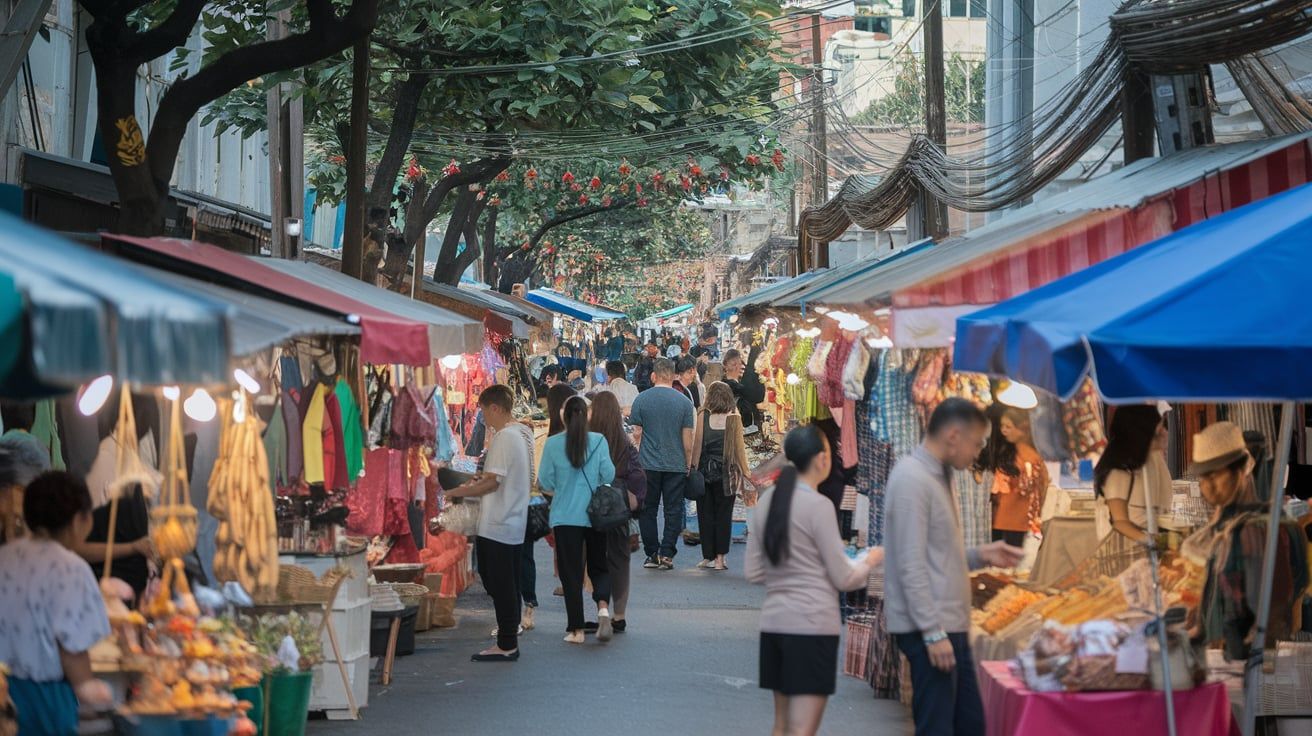
Place to Visit at Thailand — The true holiday wonders of Thailand are found outside Bangkok.
Northern Thailand, stretching almost 400 kilometres from the Burmese border to Laos, was once known as the Lannna Kingdom (land of a million ricefields). The kingdom was founded in 1296 and retains its own unique beliefs, music, culture, cuisine, dress and dialect. The former kingdom stretches across villages, valleys, towns and jungles north-east to Chiang Rai, west to the long-necked tribes of Mae Hong Son, and south to Lampang.
The most popular northern travel tour destination is Chiang Mai, an historic city founded in the 13th century as capital of the Lanna Kingdom with an awesome backdrop of mountains and an excellent choice of food, travel accommodation and holiday shopping outlets.
Chiang Mai is at 310 metres altitude and the province is home to about 1.5 million people. The city is surrounded by a 700 year old moat and is dotted with about 300 Buddhist wats, or temples. An estimated five million tourists visit Chiang Mai each year.
About an hour’s flight north of Bangkok, Chiang Mai has long been regarded as a cultural capital and is renowned for the graceful beauty of its women. The city boasts more than 300 temples and enjoys comparatively cool nights because of its altitude.
Starbucks, McDonalds and various luxury hotels have invaded Chiang Mai but it’s still home to hills tribes, elephant camps, quality artisans and craft workers.
The most important and popular temple is the 16th century Wat Pra That Doi Suthep, 15km from Chiang Mai. Chiang Mai’s oldest temple is Wat Chiang Man (1296) and its largest is Wat Chedi Luang. At all temples in Thailand, you should be modestly dressed and enter barefoot.
The celebrated Night Bazaar of Chiang Mai is held on several blocks centered around Chang Klan Rd in the city’s CBD, although tourist trinkets are the main product (albeit usually cheaper than in Bangkok). Better products and lower prices can often be found in the Sunday Market at Tha Phae Gate. Plenty of bars and cafes can be found along Tha Pae and Loi Kroh roads. If you want fresh fruit or any of the local delicacies, markets to check out are Warorot, Sanpakoi or Somphet.
As in most of Thailand, there is little apparent order within traffic on the roads of Chiang Mai, a city with humid weather but a much more relaxed atmosphere than Bangkok.
There are fewer tourist scams in Chiang Mai than in Bangkok but prostitution and drug use are equally common.
There are still several tribes such as the Lahu, Lisu, Hmong and Yao in the hills north of Chiang Mai, and a daytrip to their villages is usually priced anywhere from 1,000 baht to 4,000 baht in 2011.
Chiang Mai, known as the Rose of the North, is a great place if you want elephant trekking, mountain biking, rafting down the river Mae Taeng, rock climbing or bungie jumping. There are more than 20 elephant parks close to Chiang Mai. A popular daytrip is to the national park at Doi Inathanon, which is Thailand’s highest mountain at 2,565 metres.
Tweechol Botanic Garden in Chiang Mai has paddle boats, a cafe, a public swimming pool, a petting zoo and hire bikes, with entry in 2012 around 480 baht.
Place to Visit at Thailand … Chiang Mai public health authorities are warning residents, particularly the elderly and those with respiratory diseases, to avoid prolonged outdoor activities as the city’s air pollution is reaching critical levels. Medics report that the number of people suffering respiratory diseases in Chiang Mai is rising dramatically.
Arguably the most authentic region of Thailand is in the north-east (Isaan) where the Mekong River borders Laos. This area has few tourists and its own distinctive regional culture and cuisine, a blend of northern Thai and Lao food. Towns worth exploring include Nong Khai, Nakhon Phanom and Makdahan. Phimai Historical Park near Korat (Nakhon Ratchasima) boasts elaborate stone temples dating back to the 10th century and events worth catching in Isaan include the November elephant round-up at Surin Elephant Centre.
About a half day’s drive north-west of Bangkok at the far north of the central plains is the ancient city of Sukhothai, the first capital of the independent Thai people. Founded in the 13th century and capital of the Kingdom of Siam until the 15th century, Sukhothai and its satellite city of Si Satchanalai boast the ruins of about 200 imposing temples, palaces and monuments in a World Heritage site. The central temple complex of Wat Mahathat has imposing and crumbling towers laced with detailed carvings of monks in prayer. The ancient Buddha statues in Sukhothai are regarded by many to be the best in Thailand and many Thais make a pilgrimage to the temple site of Wat Si Chum. Sukhothai is nestled into a green oasis of solitude and quiet within a national park broken into five zones, each requiring an entry fee of about 90 baht (2013).
If you want to see authentic Thai life away from the tourist holiday spots, good locations include Chachoengsao province about 80 kilometres east of Bangkok’s Suvarnabhumi Airport. The picturesque Prachin Buri and Nakhon Nayok provinces are 100 kilometres and 130 kilometres north of Bangkok respectively. While in this region, it’s worth visiting Khao Yai National Park, a biological wonderland covering about 2,000 square kilometres and inhabited by elephants, gibbons, tigers, leopards and Malaysian sun bears. The national park is criss-crossed by about 50 kilometres of hiking trails and is famed for its majestic waterfalls.
Nan province is about 670 kilometres north of Bangkok and is popular among tourists seeking a remote natural hideaway for their holiday. The provincial capital of Nan town has two superb Buddhist temples - the 1696 Wat Phumin and the 1458 Wat Chang Kham Woraviharn. The town is built next to Nan River, Thailand’s second longest, which features longboat races in October and provides an ideal setting for peaceful bamboo rafting trips.
An increasingly popular travel magnet for young backpackers in northern Thailand is the lazy village of Pai, about halfway along the uncomfortable, twisting road between Chiang Mai and Mae Hong Son. Pai’s population has soared in recent years to around 10,000 and offers about 200 places for accommodation. Pai has a relatively cool climate at 600 metres altitude, boast hot springs and a picturesque river, and the local tribes are Karen, Hmong and Lisu.
Arguably Thailand’s best Lanna-style temple is Wat Phra That Lampang Luang, 500 years old and made of wood in the northern district of Lampang. Harking back to the ancient Thai kingdom of Lanna, Lampang is bursting with ancient monuments and symbols, and provides a quiet retreat from the frenzy of Bangkok because there are very few tourists. The town of Lampang is dissected by the Wang River and the oldest area is to the north. Most homes are built of teak and the architecture of many buildings is influenced by past occupation of the area by Burma. Brightly painted rot mah, or horse-drawn taxi carriages, are still used in Lampang, having disappeared in the rest of Thailand.
There are plenty of eco-tourism and adventure travel firms offering fantastic jungle holidays in the north of Thailand. Popular tourist drawcards include foot and elephant trekking, calm and whitewater rafting, mountain biking, kayaking, caving, camping or horse riding. The jungle and forest environment are exciting and enthralling, and it’s worth remembering that wild tigers still live in these parts.
🌆 Overview of Bangkok
- Population: Officially 7 million, though unofficial estimates exceed 10 million.
- Challenges:
- Crowded, polluted, and infamous for massive traffic jams.
- Sinking at a rate of 12 centimeters per year due to overdevelopment.
- Charm:
- A bustling city featuring a lacework of canals (klongs) and over 400 Buddhist temples and golden pagodas.
🏛️ Must-Visit Landmarks
The Grand Palace
- Highlights:
- Established in 1782, covering almost 220,000sqm.
- Renowned for its golden spires and the tiny Emerald Buddha (no photography allowed).
- Hours: Daily, 8:30 AM – 3:30 PM.
- Entry Fee: 350 baht for foreigners.
- Dress Code: Strictly enforced; sarongs available for those in improper attire.
Wat Pho (Temple of the Reclining Buddha)
- Features:
- Houses the 46-meter-long Reclining Buddha coated in 24-carat gold leaf.
- Intricate mother-of-pearl inscriptions on its soles.
- Offers expert Thai massages.
- Hours: Daily, 8:00 AM – 5:00 PM, with a midday break.
- Entry Fee: 50 baht.
- Dress Code: Modest attire required.
Wat Arun (Temple of Dawn)
- Iconic riverside temple featuring a 67-meter tall pagoda on the Chao Phraya River.
Erawan Shrine
- Located at the corner of Ratchadamri and Ploenchit roads, near the Grand Hyatt Erawan Hotel.
Suan Pakkad Palace
- Highlights:
- Displays prehistoric relics, traditional Thai housing, and pottery from the Ban Chiang region.
- Entry Fee: 100 baht.
🎭 Cultural Experiences
Traditional Thai Puppet Theatre
- Location: Near Suan Lum Night Bazaar (new riverfront bazaar opening in 2012).
- Admission: 900 baht for adults, 300 baht for children.
Siam Niramit Theatre
- Highlights:
- 2,000-seat venue showcasing Siamese-Thai history through music and dance.
- Admission: 1,400 baht for adults, 900 baht for children.
Thai Kickboxing (Muay Thai)
- Venue: Lumpinee Boxing Stadium, Rama IV Road.
- Schedule: Tuesdays and Fridays (6:30 PM), Saturdays (5:00 PM and 8:30 PM).
🛶 Exploring the Chao Phraya River
- Tourist Boats:
- Day passes cost 100 baht, offering unlimited rides and commentary.
- Stops include key landmarks like Wat Pho, the Grand Palace, and Chinatown.
- Cruise Ships:
- Popular for trips to the ancient capital of Ayutthaya.
- Regular Ferries: Cheaper but less comfortable than tourist boats.
🌌 Nightlife in Bangkok
- Girlie Bars: Concentrated in the Patpong area; exercise caution to avoid scams.
- Alternative Entertainment:
- Theatres, such as Siam Niramit or Joe Louis Puppet Theatre.
- Traditional Thai kickboxing matches.
🍜 Bangkok Street Food
- Safety: Generally safe and very affordable.
- Top Locations:
- Khao San Road: Great food but crowded with hawkers.
- Thanon Rambuttri (Eastern End): Adjacent to Khao San Road; quieter but equally delicious.
- Thanon Chakrapong: Famous for fried rice stalls.
- Metro and Skytrain Stations: Pushcart vendors selling ultra-cheap eats.
- Prices:
- Meals: 20–70 baht.
- Chang beer: ~45 baht.
🛡️ Tips for Navigating Bangkok
- Traffic and Pollution:
- Many locals wear masks to protect against vehicle exhaust.
- Consider public transport options like the Skytrain or ferries.
- Cultural Etiquette:
- Dress modestly when visiting temples and cultural sites.
- Bargain politely when using tuk-tuks or other non-metered transport.
Bangkok offers a mix of vibrant nightlife, historical landmarks, and cultural experiences, making it a must-visit destination for travelers. With its rich history, bustling streets, and iconic temples, the city is sure to leave a lasting impression.
Places in Thailand to Go: Destinations, History, and Travel Tips
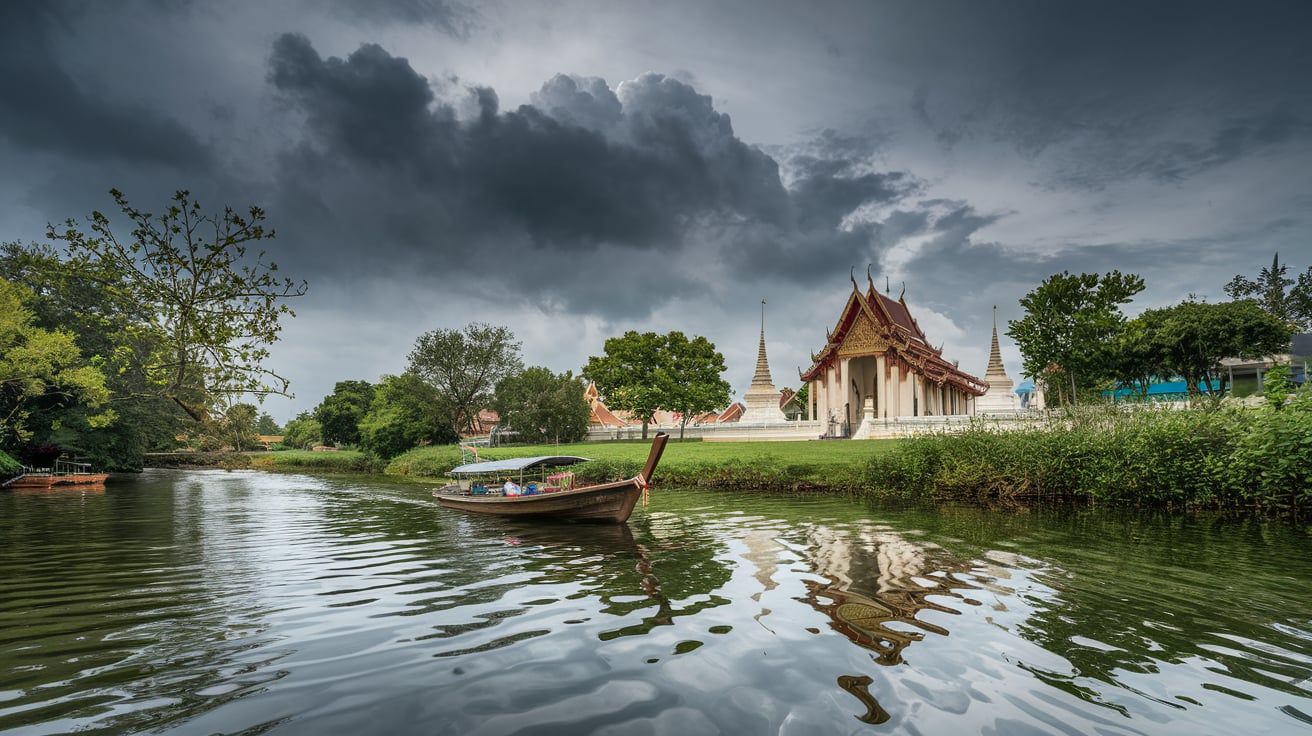
Places in Thailand to Go — the jungle forests in the south of Thailand are taller, darker and more evergreen than jungles in the north surrounding Chiang Mai.
Other popular Thai destinations include Chiang Rai and the pristine islands and beaches of Phuket, Koh Samui, Pattaya, Krabi, Khao Lak, Koh Samet and Koh Chang. Tourist sights worth seeing in Thailand’s central region surrounding Bangkok include the ancient capital of Ayutthaya with its World Heritage listed ruins and temples, and the Bridge over the River Kwai at Kanchanaburi.
Thailand sided with the Japanese during World War 2 and went through more than 20 military coups after the war before democracy settled in the late 1970s, notwithstanding a coup in 1991 and the restoration of civilian government in 1992.
The currency and economy collapsed in 1997, prompting intervention by the International Monetary Fund.
Thailand’s economy has been improving since. Although prosperity has returned, there are still large pockets of poverty which have been worsened by the economic turmoil.
The Thai economy has been strengthening in the new millennium despite the tragedy of the 2004 Boxing Day tsunami that claimed more than 8,000 lives in Thailand.
It’s worth noting that Thai cuisine is utterly delicious but it also includes some extremely hot spices and MSG, both or either of which you can order out of your meal if you have a sensitive palate or health concerns. The local tropical fruits are exquisite.
Meals in Thailand can be purchased for less than 100 baht but a quality dinner will probably set you back between 200 baht and 400 baht.
Alcohol is readily available in stores and bars throughout Thailand. Local beers are good quality, the best known called Singha. Two of the more popular local whiskeys (rum) are Mekong and Sang Thip.
Medical facilities in Thailand are good, particularly in Bangkok, although some regional areas are below Western standards and it’s best to avoid Thailand’s public hospitals. About 10% of Thailand’s annual visitors (15.5 million in 2010) come for health services ranging from dental work to fertility procedures to hip replacements.
Pharmacies in Thailand are fairly reliable. They are known as “ran kai yar” and foreigners can usually spot them either because the term “drug store” is sign-posted in green or because the “Rx” symbol is displayed on the store window.
The multilingual Tourist Police in Thailand can be telephoned on 1699 for emergencies or information.
Most major banks throughout the country have Automatic Teller Machines. Currency exchange rates are much better at banks and money changers than at hotels. Be aware that ATMs usually charge 150 baht for each withdrawal.
🌴 Popular Destinations
Southern Thailand
- Home to tall, dark, evergreen jungle forests, distinct from the northern jungles of Chiang Mai.
Northern Thailand
- Chiang Mai: Known for its lush, accessible jungles and cultural heritage.
- Chiang Rai: A smaller city with stunning temples, including the famous White Temple.
Beaches and Islands
- Phuket, Koh Samui, Pattaya, Krabi, Khao Lak, Koh Samet, Koh Chang:
- Known for pristine beaches, clear waters, and vibrant nightlife.
Central Thailand
- Ayutthaya:
- Former capital featuring World Heritage-listed ruins and temples.
- Kanchanaburi:
- Famous for the Bridge over the River Kwai and its WWII history.
🕊️ A Brief History
- WWII: Thailand sided with Japan during the war.
- Post-War Era:
- Over 20 military coups before democracy stabilized in the late 1970s.
- Brief disruptions in 1991 (military coup) and 1992 (restoration of civilian rule).
- Economic Crisis:
- The 1997 Asian financial crisis led to economic collapse and IMF intervention.
- Recovery:
- Significant economic improvements in the 2000s.
- Tragic impact of the 2004 Boxing Day tsunami, which claimed over 8,000 lives in Thailand.
🍽️ Food and Drink
Thai Cuisine
- Flavors: Exquisite tropical fruits, bold spices, and unique local dishes.
- Meals often include MSG or strong spices, which can be omitted upon request.
- Cost:
- Budget meals: Under 100 baht.
- Quality dinners: 200–400 baht.
Alcohol
- Local Beers: Singha is a standout.
- Local Spirits: Popular options include Mekong and Sang Thip (both rum-based).
🏥 Healthcare and Medical Tips
- Medical Facilities:
- Excellent in Bangkok; regional areas may be below Western standards.
- Private hospitals preferred over public ones.
- Medical Tourism:
- About 10% of visitors (2010: 15.5 million) come for services like dental work, fertility procedures, and surgeries.
- Pharmacies:
- Known as “ran kai yar”. Look for “drug store” signs or the “Rx” symbol.
🛡️ Practical Travel Tips
- Tourist Police:
- Dial 1699 for multilingual assistance in emergencies or for information.
- ATMs and Currency Exchange:
- ATMs charge 150 baht per withdrawal.
- Currency exchange rates are better at banks or money changers than hotels.
Thailand offers a mix of natural beauty, rich history, vibrant culture, and delicious cuisine. Whether you’re trekking through northern jungles, relaxing on a southern beach, or exploring ancient temples, there’s something for every traveler to enjoy.
Nice Places to Go in Thailand: Practical Travel Tips and Shopping Guide
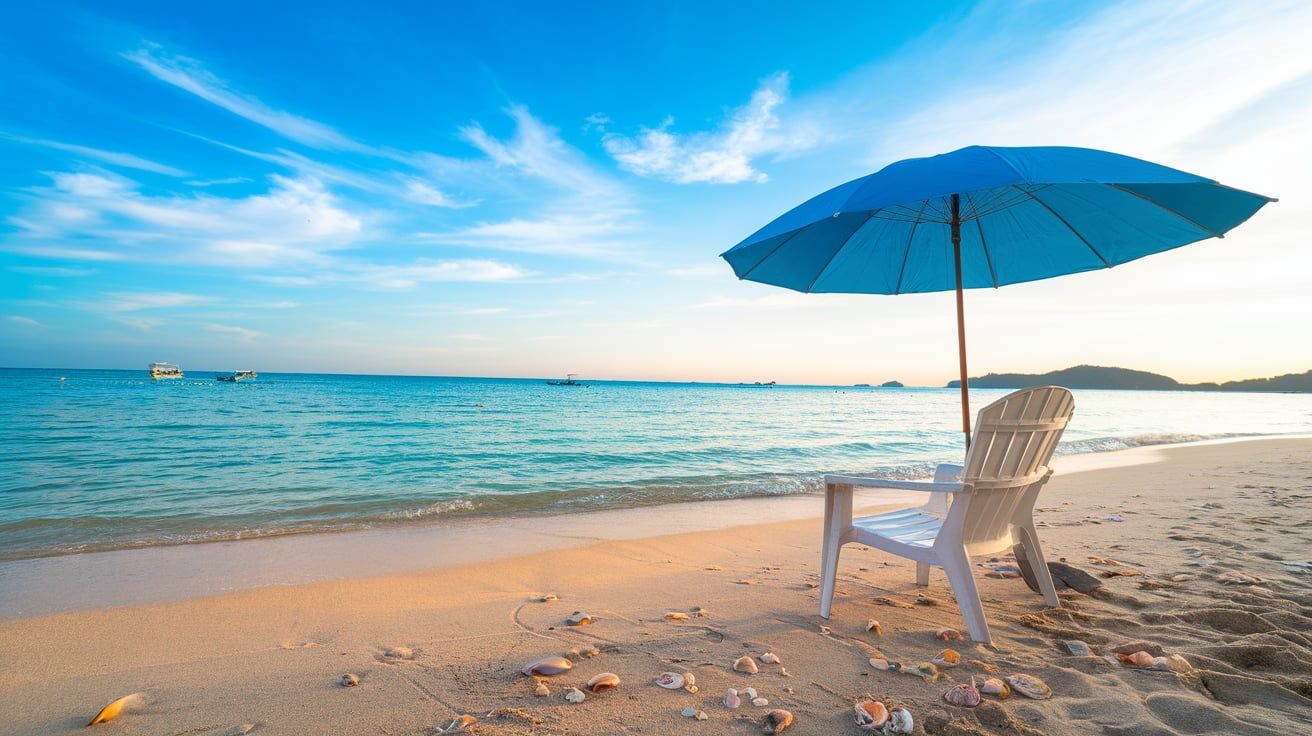
Government and business trading hours in Thailand are generally between 8am and 5pm with most stores open till 7pm or later every day of the week.
Nice Places to Go in Thailand … It can be worthwhile before your Thailand holiday travel to check that your debit card is linked to either the MasterCard/Cirrus or Visa/PLUS networks.
Don’t expect to find a Western toilet everywhere you go during your holiday in Thailand as various places use Asian toilets (a hole in the ground) and not all have toilet paper.
Red public pay phones are for timed local calls and blue public pay phones are for long-distance calls within Thailand.
All of the country is seven hours ahead of Greenwich Mean Time.
Don’t trust the tap water anywhere in Thailand. Always use bottled water for drinking and brushing your teeth, and it can be worthwhile checking that the ice in your drink is sterile.
Products for sale in Thailand outside department stores and shopping malls often don’t list a price so it’s up to you to gauge the true value of an item and bargain accordingly.
Simply note that if you look like a tourist or you’re in a tourist zone, the prices quoted are usually way too high - even if they’re cheaper than in your home country. Beware that numerous businesses in Thailand, particularly taxi drivers, will try to rip off farang (foreigners) and at parks and various commercial attractions you’ll often find one entrance fee for Thais and a much higher one for non-Thais.
Siam Paragon, next to Siam Skytrain station, is the largest shopping emporium in South-East Asia with half a million square metres of floorspace. For one-stop shopping, CentralWorld and Ma Boon Krong are also huge and convenient shopping centres in Bangkok. CentralWorld is accessed via Skybridge from the Chitlom BTS (Sky Train) station and Ma Boon Krong is accessed via the National Stadium BTS (Sky Train) station.
It’s almost essential you browse the markets of Thailand if you wish to truly experience the local culture during your Thai holiday travel. Chatuchak is one of the largest markets in Bangkok, covering about five hectares with more than 15,000 stalls. Items for sale vary from monkeys to fruit to antiques. This is billed as one of the largest markets in the world and prices are low with vendors expecting customers to haggle for even cheaper bargains. Chatuchack Market is at Mo Chit, the northern end of the BTS Sky Train line, and is open Saturdays and Sundays from 8am till 7pm.
The Suan Lum Night Bazaar is another market paradise but is aimed more at tourists than Chatuchak with higher prices and a cleaner setting that is easier to navigate. Suan Lum Night Bazaar is outside the underground MRT station Lumpini and is open from 6pm to midnight every day.
A market rarely visited by tourists is Phahurat, about a 10 minute walk south of the Grand Palace. Little English is spoken or written here but the stalls serve fantastic stews and soups at bargain prices, and there’s a huge offering of coconuts, bananas, melons, oranges, papayas, cakes and sweets.
Bang Rak Night Markets are a huddle of stalls that concentrate on fashion and jewellery at knockdown prices in the heart of Bangkok, a short tuk-tuk ride from Chao Phraya River and a stroll from the Sky Train monorail system.
Tourist-oriented clothing stalls are located on Pratunam, Silom and Skukhumvit roads, trading all day and through half the night. The renowned Patpong night market off Silom Rd isn’t as good as it once was but a feast of digital computer gear can be found at Panthip Plaza on Phetchaburi Rd. Also popular is the Damnoen Saduak Floating Market (best between 6.30am and 8am) in Ratchaburi province about 110km south-west of Bangkok.
Muang Boran is a theme park on the southern outskirts of Bangkok at Samut Prakan. The park is an open air museum built over 320 hectares in the shape of Thailand and displays 109 scale versions of the country’s most famous ancient Siam buildings. This theme park, also known as Ancient Siam, usually doesn’t have queues and is open daily from 8am to 5pm. The entrance fee in 2011 was 400 baht for adults.
Bang Sai Royal Folk Arts and Crafts Centre north of Bangkok is another important theme park highlighting the culture and architecture of Thailand’s regions. The park is open daily except Mondays from 8.30am to 4pm.
Remember that the Thais are proud of their king and their predominantly Buddhist religion. Respect their holy temples and sites when entering and wear the right clothing (no shorts).
Don’t point your feet toward someone if you’re sitting and don’t touch people on the head.
Locals at most tourist holiday spots are used to foreigners without manners but it’s smarter and safer to respect the traditions of your hosts.
🕒 Business Hours and Time Zone
- Government and Business Hours:
- Typically 8am–5pm, with most stores open until 7pm or later every day.
- Time Zone:
- Thailand is 7 hours ahead of Greenwich Mean Time (GMT+7).
🚾 Toilets and Water Safety
- Toilets:
- Many places use Asian toilets (hole in the ground); carry toilet paper.
- Water Safety:
- Avoid drinking tap water. Use bottled water for drinking and brushing your teeth.
- Ensure ice in drinks is sterile.
💳 Banking and Payments
- Debit Cards:
- Ensure your card is linked to MasterCard/Cirrus or Visa/PLUS networks for ATM use.
- Bargaining:
- Prices in markets are often negotiable, especially in non-department store settings.
- Tourist Zones: Expect inflated prices; haggle to get fair deals.
🛍️ Shopping Destinations
Modern Shopping Malls
- Siam Paragon:
- Southeast Asia’s largest mall with 500,000 sqm of floorspace, next to the Siam Skytrain station.
- CentralWorld:
- A massive mall accessible via Skybridge from Chitlom BTS station.
- Ma Boon Krong (MBK):
- Convenient shopping at National Stadium BTS station.
Markets
- Chatuchak Market:
- One of the largest in the world, with 15,000 stalls across 5 hectares.
- Sells everything from antiques to fresh fruit; haggling is expected.
- Open: Saturdays and Sundays, 8am–7pm.
- Suan Lum Night Bazaar:
- A tourist-friendly market with higher prices but a cleaner, more organized layout.
- Open: 6pm–midnight daily, near Lumpini MRT station.
- Phahurat Market:
- A local market south of the Grand Palace, known for affordable stews, soups, and tropical fruits.
- Bang Rak Night Markets:
- Known for fashion and jewelry at bargain prices.
- Pratunam, Silom, and Sukhumvit Roads:
- Tourist-focused clothing stalls open day and night.
- Damnoen Saduak Floating Market:
- A famous floating market in Ratchaburi province, best visited 6:30am–8am.
🏛️ Cultural and Theme Parks
- Muang Boran (Ancient Siam):
- Open-air museum shaped like Thailand, featuring 109 scale replicas of historical landmarks.
- Location: Samut Prakan, southern Bangkok.
- Hours: 8am–5pm daily.
- Entry (2011): 400 baht for adults.
- Bang Sai Royal Folk Arts and Crafts Centre:
- Highlights regional Thai culture and architecture.
- Location: North of Bangkok.
- Hours: 8:30am–4pm daily, closed Mondays.
🛠️ Practical Tips
- Pay Phones:
- Red: Timed local calls.
- Blue: Long-distance calls within Thailand.
- Cultural Respect:
- Respect temples and religious sites; wear modest clothing (no shorts).
- Etiquette: Avoid pointing your feet at people or touching their heads.
- Local Customs:
- Thais value politeness and tradition, especially regarding their king and Buddhism.
🌏 Immerse in Local Culture
- Thailand’s markets and cultural sites offer a rich and authentic experience. While locals are accustomed to tourists, showing respect for their traditions ensures a more welcoming interaction. From bustling city markets to serene temples and historical landmarks, Thailand has something to delight every traveler.
Thailand: Immigration Rules, Safety, and Travel Advice
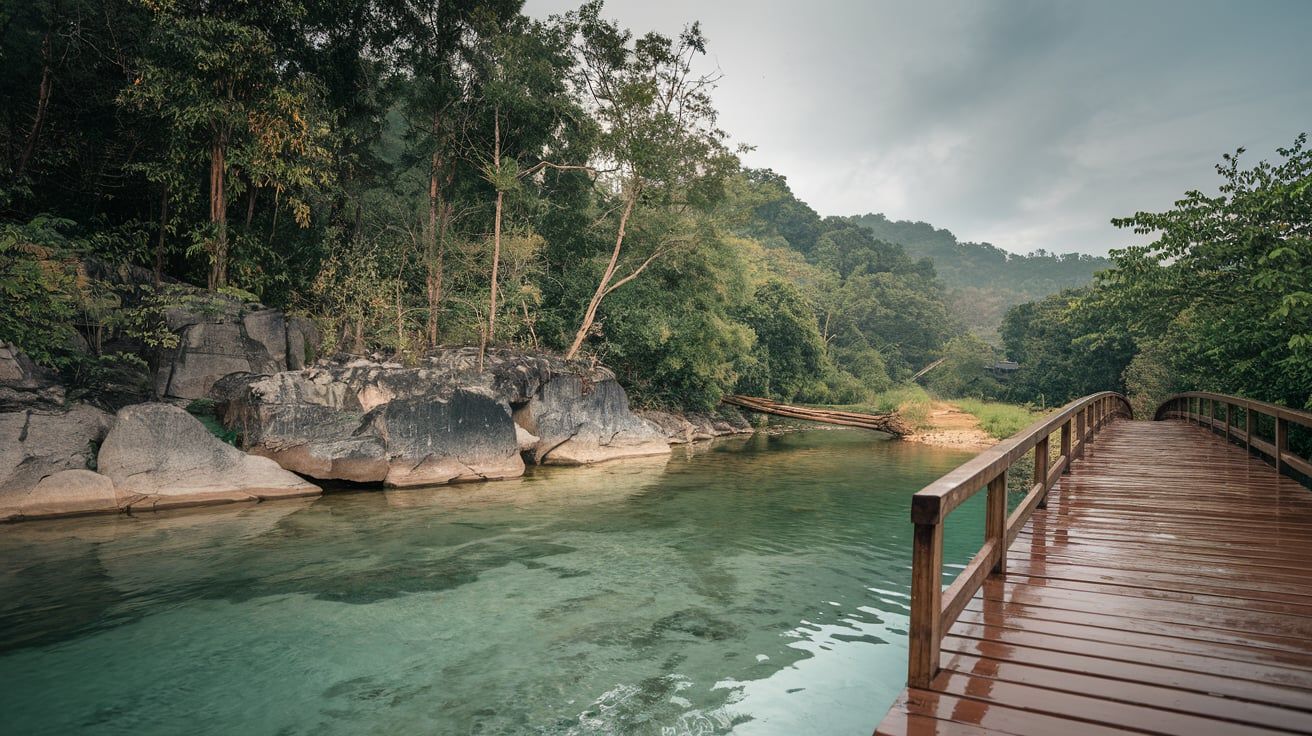
Thailand travel guide … Thailand has tightened its immigration rules affecting tourists from 41 countries who have previously been allowed to stay in Thailand without a visa for up to 30 days. Among the 41 countries are Australia, the UK, Canada, France, Germany, Japan and the US. Tourists can extend their stay by travelling to the neighbouring countries of Cambodia, Malaysia, Laos or Burma and returning with new entry stamps. From October 1 2006, tourists from the designated countries may still enter Thailand without visas and stay for up to 30 days. However, their entry stamps will be renewable twice at most for a maximum stay of 90 days. Tourists who stayed for 90 days must leave Thailand for at least 90 days before being permitted back into the country.
Usually, foreigners are well regarded in Thailand’s social pecking order and Thais are a particularly joyous people when tourists take an interest in their language, food or culture.
However, tourists should beware that there are also plenty of thieves keeping an eye on their luggage and conmen chasing a dollar.
Women in particular should be cautious if travelling alone.
About 5% of the Thai population is Muslim, most living in the five southern provinces bordering Malaysia’s fundamentalist Muslim heartland.
A southern Islamic insurgency has claimed more than 2,500 lives since January 2004 and there have been ongoing bomb blasts and shootings. Fearful tourists have avoided travel mainly in the provinces of Yala, Narathiwat, Songkhla and Pattani, with foreign embassies advising against non-essential travel through these areas.
Most of Thailand remains safe for tourists who should nevertheless be aware of the threat and check ongoing media and/or consulate advice before they travel to the southern region.
If you really get into adventure holiday travel, be aware of occasional military skirmishes and outlaw incidents on the Myanmar and Cambodian borders.
Be very protective of all your valuables and avoid unlicensed taxis recognisable by their black and white license plates.
Thailand holiday tour guide
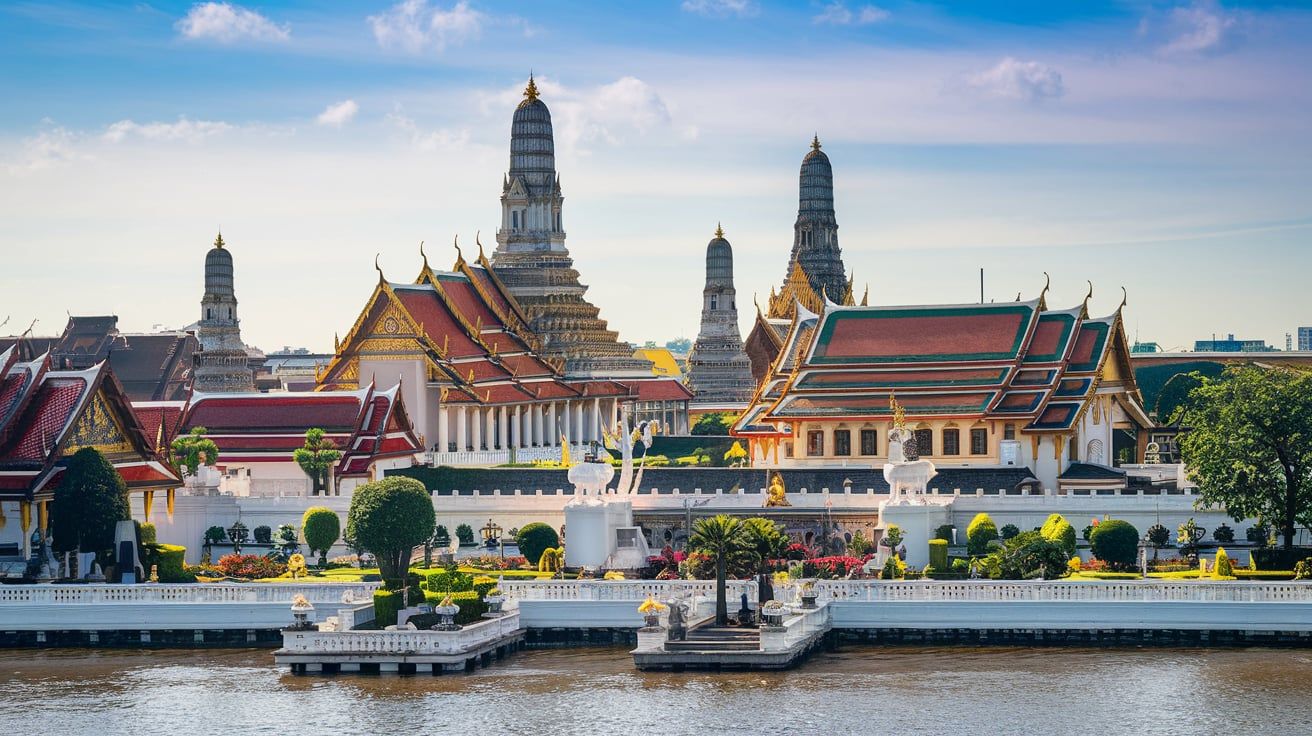
If you enter Thailand through an airport you are given a 30 day tourist visa but if you enter Thailand on foot or by car/bus/boat they will only give you a 15 day tourist visa. A seven day extension costs 1,900 baht.
There are few health risks although it’s worth defending against malaria if you travel in areas such as Kanchanaburi Province and along parts of the Cambodian border.
By August 2006, bird flu had been found in most Thai provinces. All 76 provinces have been declared animal epidemic control areas with stricter rules on the transport and handling of birds. More than a dozen bird flu deaths had been recorded in Thailand by 2011.
The electricity voltage is 220 volts at 50Hz through wall outlets with two flat-pronged or round-pronged holes. You may need an adapter.
The country uses metric measurements and Thailand’s telephone prefix is 66.
Thailand travel guide … Prescription glasses, dental work and cosmetic surgery cost far less in Thailand than in most western countries and many tourists take the opportunity to pick up new spectacles or have their teeth repaired.
Traditional Thai massages can be enjoyed just about everywhere and, depending on where you are, the prices vary from 150 baht to 300 baht for an hour.
The Thai New Year, known as Songkran, is celebrated in mid-April and is Thailand’s biggest annual festival. Children and adults indulge in water fights during Songkran and streets like Bangkok’s Khao San Road are lined with teenagers carrying hoses and buckets on April 13.
🛂 Updated Immigration Rules
- Visa Exemptions:
- Tourists from 41 designated countries (e.g., Australia, UK, Canada, France, Germany, Japan, US) can stay in Thailand for up to 30 days without a visa.
- Extensions and Limits:
- Tourists may extend their stay by traveling to neighboring countries (Cambodia, Malaysia, Laos, Burma) and returning with a new entry stamp.
- As of October 1, 2006, entry stamps can be renewed twice, allowing a maximum stay of 90 days.
- After 90 days in Thailand, tourists must leave the country for at least 90 days before re-entry is permitted.
🙌 Social Etiquette and Safety
- Cultural Appreciation:
- Foreigners are generally well-regarded, and Thais are particularly welcoming to those who show interest in their language, food, and culture.
- Safety Concerns:
- Theft and Scams:
- Be vigilant about luggage and valuables; thieves and conmen are active in tourist-heavy areas.
- Solo Travelers:
- Women traveling alone should exercise caution, particularly at night or in less populated areas.
- Theft and Scams:
🌍 Regional Safety Alerts
Southern Thailand
- Muslim Population:
- About 5% of Thailand’s population is Muslim, predominantly in the five southern provinces bordering Malaysia.
- Insurgency Issues:
- Since 2004, a southern Islamic insurgency has led to over 2,500 deaths, with ongoing bombings and shootings.
- Avoid Non-Essential Travel to the provinces of Yala, Narathiwat, Songkhla, and Pattani.
- Safety Tip: Check updates from media or your embassy/consulate for the latest advice if planning to visit southern Thailand.
Border Areas
- Myanmar and Cambodia Borders:
- Occasionally experience military skirmishes and outlaw activity.
- Stay informed about border area conditions if planning adventure travel.
🚖 Transportation and Valuables
- Valuables:
- Be protective of all personal belongings, particularly in crowded tourist zones.
- Taxis:
- Avoid unlicensed taxis, which can be identified by their black and white license plates. Opt for licensed taxis or use reputable ride-hailing services.
🔍 General Travel Safety
While most of Thailand is safe for tourists, awareness and preparation are key to ensuring a smooth and enjoyable trip. Pay attention to local advice, respect cultural norms, and take precautions to protect yourself and your belongings.
Explore Thailand: A Guide to Its Top Destinations
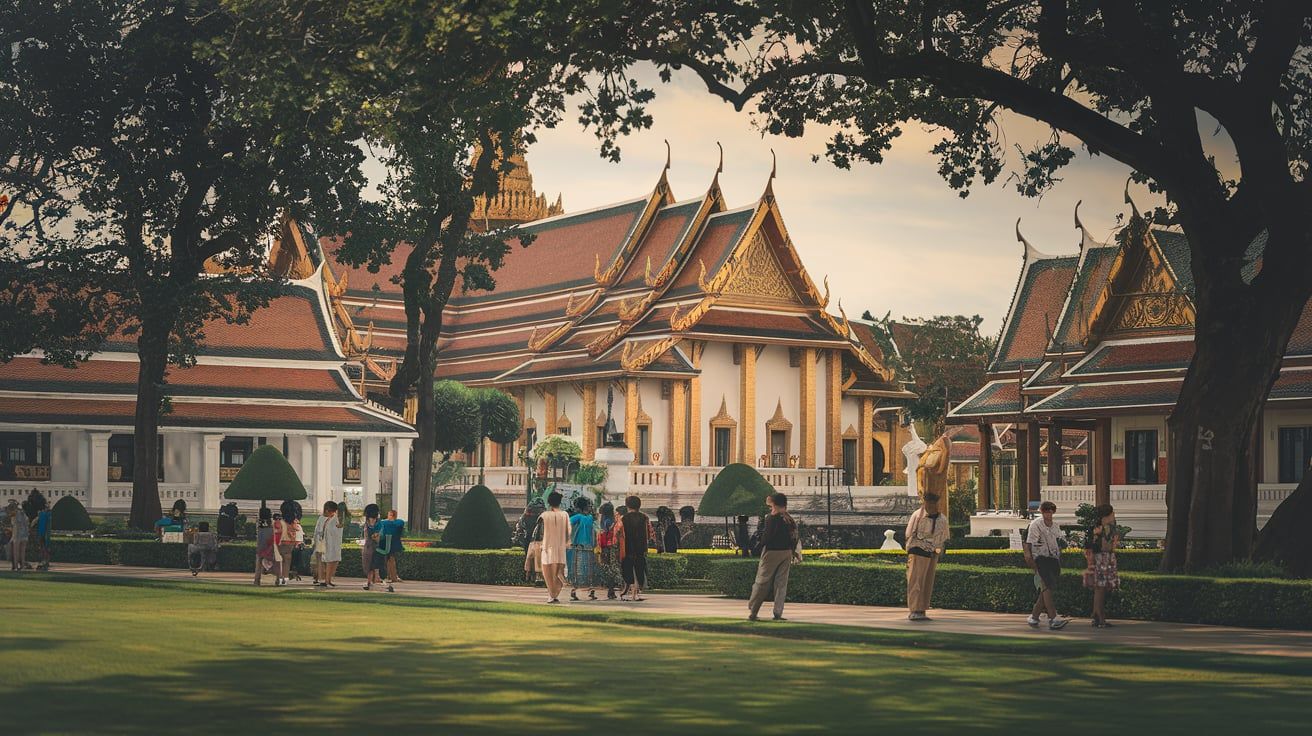
Pattaya, about 150 kilometres south-east of Bangkok on the Gulf of Thailand coast, has always been a popular seaside holiday town renowned for its parties. The new Suvarnabhumi Airport on the eastern side of Bangkok is just a convenient two hour drive from Pattaya.
About 150,000 people live in Pattaya, which has a pulsating nightlife that attracts about six million tourists a year. Some say the real Pattaya population is more than 300,000. There are plenty of family attractions around Pattaya so the town isn’t just for singles.
The main beach of Pattaya is narrow with grey sands usually carpeted by sunlovers. A wider, whiter beach is Jomtien about two kilometres south of Pattaya and solitude can be enjoyed in the rocky coves of Wong Amat north of the town. Popular holiday pursuits include paragliding, scuba diving, bungie jumping, paintballing, go-carts and golf (the area has about 20 international golf courses and driving ranges). For eats in Pattaya, head to busy Second Rd. Most cut-price tourist trinkets such as sunglasses and CDs can be found in stalls along Beach Rd. For extreme nightlife, Pattaya’s central location is Walking St at the southern end of Pattaya Beach. Massage parlours are everywhere, the average price for a massage in 2011 around 200 baht per hour (300 baht for an oil massage).
Tourist attractions worth visiting while holidaying in Pattaya include the spectacular Temple of Truth honouring eastern religions, an intricately hand-carved wooden building 105 metres high and 100 metres across. Construction began in 1982 and is expected to continue till 2028. Other local travel highlights include the Nong Nooch Tropical Botanical Garden covering 210 hectares, the Million Years Stone Park featuring petrified trees more than 100 million years old, Thailand’s biggest artificial waterfall plus rock and bonsai art.
Koh Chang, also known as Elephant Island, is Thailand’s second largest island at 492 square kilometres. Much of the island is still covered in virgin rainforest, jungle and mountains with uncrowded beaches, similar to Ko Samui and Phuket before 1990. There are no motor vehicles. Most of the island’s fun is centred on White Sand Beach. Koh Chang is a spectacular tropical island where beach bungalow accommodation can be found in 2011 for between 600 baht and 3,000 baht per night. The nights can be humid and air-conditioned rooms cost a few dollars more. One of the cheapest spots on Koh Chang is Lonely Beach and the island has plenty of ATMs and broadband facilities. A flight from nearby Trat Airport to Bangkok takes about 40 minutes.
Khao Lak is world-renowned for diving and dive company shopfronts line the main shopping street, which is also the southern route to Phuket and the northern route to Surat Thani. The main street also offers a tsunami museum and travel firms. Eco-tours and elephant safaris are available in the nearby national parks such as Khao Lak Lamru National Park about three kilometres out of town. Hotel accommodation in Khao Lak can be found for as little as 700 baht per night in 2011, ranging up to 12,000 baht for top-class resorts. Khao Lak is about an hour by taxi from Phuket Airport. It’s much cheaper to take a minibus to Phuket bus station and catch the air-conditioned Surat Thani bus which delivers tourists to the centre of Khao Lak for 90 baht.
About 60 kilometres west of Surat Thani is the huge and spectacular Khao Sok National Park, boasting the stunning Ratchaprapha Lake to the south with accommodation in raft and tree houses. Khao Sok National Park covers 740 square kilometres and its northern half is populated by wildlife such as elephants, tigers, otters, deer and monkeys. The primitive and untouched forests of Khao Sok are believed to be more than 160 million years old, and there is a ceaseless background drone of wildlife and insects. Worth visting in the park is the Tum Praguypet cave system. Be aware that Khao Sok National Park is in one of Thailand’s wettest regions with annual rainfall averaging 3500mm and most travellers prefer the dry season. In 2013, entrance to the park cost 200 baht. The sparse but comfortable Phutawan Raft Houses comprise 40 raft houses on Ratchaprapha Lake with rooms built from bamboo, costing 700 baht per night including meals. A longtail boat journey to the raft houses takes about 40 minutes and cost about 2,500 baht in 2011. Khao Sok Nature Resort has 11 tree houses at up to 1500 baht per night and two ground bungalows at 700 baht per night in 2011.
The popular resort island of Phuket off the Andaman coast has fully recovered from the 2004 tsunami and tourists are again packing the hotels. Ko Phuket is Thailand’s largest island at 800 square kilometres and is a holiday mecca for more than five million foreign tourists each year, as well as many more Thais. Phuket’s interior is studded with forest-covered hills and the island’s name is believed to be a derivation of the Malay word bukit, meaning hill. Phuket once shared trade routes with Indonesia, China and Malaysia, and the discovery of tin in the 19th century sparked an economic boom with an influx of Chinese merchants whose architectural legacy is still apparent in the south-east towns of Phuket. The island boasts superb beaches, elephant jungle trekking, diving, parties every night and endless shopping. There are tailor shops in almost every street. About 35% of Phuket’s population is Muslim and the rest are almost entirely Buddhists. Phuket’s interior is laced with farms and rubber plantations and the last remaining virgin rainforest is in Khao Phra Taew National Park in the north. The famed Patong beach strip is a bit crowded and plastic and sometimes the locals can be relentless in trying to make a sale. The island has plenty of other less-crowded beaches if you explore away from the west coast’s glamorous beach strip of Patong, Karon and Kata. Nai Yang Beach in Puket’s northwest is removed from the island’s main tourist centres and runs for nine kilometres into the neighbouring Sirinath National Park. Nai Yang Beach offers plenty of unpretentious restaurants, huts and upmarket resorts. If you venture about half an hour north from Phuket International Airport along Route 4, you’ll find the beginning of about 75 kilometres of jungle-fringed coastline with just a smattering of resorts, hotels and budget accommodation in Phang Nga province. A similar hideaway from the sleaze of Patong is Nai Harn Beach near the southern tip of Phuket, where jet skis are banned and the locals boast that their beach waters are about 29C throughout the year.
Phang Nga Bay to the east of Phuket harbours numerous small islands such as Ko Phi Phi, which has grown in popularity thanks to its kayaking, snorkelling, cliff jumping, diving, trekking and beaches. The island also has sophisticated retail outlets, diverse eateries and non-stop nightlife. There are no roads or cars and the normal transport is bicycle. Ko Phi Phi suffered substantial damage fronting Ton Sai Bay in the Boxing Day tsunami of 2004, which claimed 700 lives on the island. The nearby island of Ko Yao Noi in Phang Nga Bay east of Phuket usually has little nightlife but offers a tranquil holiday travel retreat from Thailand’s many other tourist havens. Koh Phanak and Koh Hong also boast hidden mangrove lagoons accessible by kayak through cliff caves at low tide.
Ko Tarutao National Marine Park is a 51 island group about 30 kilometres off the Satun mainland in the Andaman Sea. Here you’ll find Ko Adang, which resembles a jungle island with pristine, empty beaches and hardly any bars - much like Phuket, Samui and Phi Phi once were.
Krabi on the west coast of southern Thailand at the mouth of the Krabi River has pearl white sands and a superb interior jungle. Apart from the beaches, popular tourist activities include caving, rock climbing and diving. Krabi is 820 kilometres south of Bangkok and 180 kilometres by road from Phuket. The main tourist area and popular beach spot is Ao Nang. Krabi province has a population around 350,000 in 2011, abut 60% Buddhist and 40% Muslim. The town has a population around 60,000 and is essentially a ramshackle sprawl of low-rise shops and offices slowly giving way to glass and concrete. The year-round temperature of surrounding waters is about 29 degrees Celsius and the local economy is highly dependent upon backpacking tourists. Local land prices have soared in recent years due to demand for coastal resort sites. Locals say the best time to visit Krabi is during the wet season from April to October, when the land is greener and there are fewer tourists on the beaches. Swedes, Germans, Britons and Australians are the most common tourist nationalities in Krabi. Some of the most spectacular rock climbing in Asia can be enjoyed on the limestone cliffs at Railay on Phra Nang Peninsula, surrounded by four beaches with facilities for expert rock-climbers and beginners, as well as accommodation and bars in laid-back Ton Sai.
Ko Lanta is a fairly large island south of Krabi which is home to about 25,000 people in 2011. Ko Lanta is 27 kilometres long and has a lush, rugged landscape with unsealed roads. The island focus is the kilometre-long Ba Kan Tiang Beach on the southern coast. The easiest way to get to Ko Lanta is to fly or bus from Bangkok to Krabi or Trang, then catch a bus and boat. Koh Lanta is where you can book tours to the spectacularly beautiful Emerald (Tham Morakot) Cave and lagoon situated on the northern tip of nearby Koh Mook island. The stunning cave is accessed through an eery 80 metre walk along a tunnel of water in total darkness, and it’s a good idea to take a waterproof camera.
Ko Samet, off the eastern shore of the Gulf of Thailand and about an hour south of Pattaya, is the closest resort island to Bangkok. Drive 90 minutes east from Pattaya and you’ll arrive at Ban Phe pier, from where ferries make a 30 minute crossing to Koh Samet. The island, narrow and 13 kilometres long, is a small Maritime National Park and is carpeted with jungle, thanks in part to its unsealed and rutted roads that prevent interior development. Note that upon arrival, the national park entrance fee is 40 baht for Thais and 200 baht for foreign adults and 100 baht for foreign children. Ko Samet is a comparatively cheap, clean and less crowded hideaway with 14 quality beaches - particularly midweek. Koh Samet has numerous resorts, mostly on its west coast, but the island remains suitable for backpackers with very basic bungalow accommodation priced as low as 350 baht per night in the high season. Quality bungalows ask up to 2,000 baht per night, including breakfast, and accommodation prices vary according to season with mid-October to March usually more expensive. Rice, noodles or beer can be enjoyed for less than 80 baht. There are a few upmarket retreats and most travel accommodation is in small resorts and bungalows along the best beachfronts. A hotel room with air conditioning, a wide bed and hot water starts from about 800 baht per night and some of these resorts also have a pool. A medium class hotel room with a sofa, TV, fridge and occasionally a bathtub starts from about 1700 baht per night, sometimes including breakfast, and a luxury room or suite costs from 4,000 baht to 7,000 baht. Boat trips costing about 600 baht include fishing, snorkelling or just cruising around the island. The only town on Ko Samet is Na Dan and the most popular beach is Sai Kaew (meaning “glass sand”) on the island’s north-east shore, an 800 metre stretch of fine white sand, restaurants and bungalow hotels. The beaches become increasingly pristine and less crowded if you travel further south. Ko Samet’s west coast is much rockier with less beaches, the exception being Ao Prao (Coconut Bay) where upmarket resorts crowd a 200 metre shoreline. Because of its proximity to Bangkok, weekends on Ko Samet are noticeably busier so it’s better to visit mid-week if you haven’t pre-booked accommodation. The island is not a place to go for clubbing or raving and the best way to get around is either in the back of a songthaew pick-up truck or by hiring a light motorcycle from 300 baht to 400 baht per day.
Other famous Thai islands include Ko Phangan, near Ko Samui , which is famous for its alcohol and drug-fuelled full moon raves which attract tens of thousands of mostly young backpackers, although the island is developing some stylish, upmarket resorts. Koh Tao, 45 kilometres north of Ko Samui, is a diver’s paradise with great visibility around its numerous reefs.
Koh Phayam, a tiny and little-known island in the Andaman Sea, provides a hideaway from humanity. Covering just 35 square kilometres, Koh Phayam is carpeted with jungle, has no cars or proper roads and saw almost no development until the late 1990s, since when about 35 mainly bungalow resorts have been built. The main beaches are Aow Yai (Big Bay) and Aow Kao Kwai (Buffalo Bay), and there’s usually just a dozen or so people to be seen along their kilometres of white sand. In 2011, Koh Phayam was still bereft of ATMs, beer bars, taxis and trinket sellers.
In 2006, more than a hundred fibreglass sculptures were placed on the seabed in Thailand’s Andaman Sea as artificial coral reefs and these locations off the six Andaman coastal provinces have become popular diving sites.
Another largely undeveloped island worth your travel is Koh Kood in the south-east corner of the Gulf of Thailand, covering 25 kilometres by 12 kilometres of hilly forest and jungle. Koh Kood, the country’s fourth largest island, is about 330 kilometres by plane from Bangkok and in 2012 was without even an ATM. This island within the Koh Chang Archipelago is largely undeveloped, its 2000 residents mostly working in fishing, rubber and coconut plantations with the tourism industry still young. Koh Kood has about 40 guesthouses, small hotels and a few luxury resorts well spaced and most along the white, sandy beaches of the west coast.
For a different taste of Thai culture while on holiday, it’s worth travelling through the province of Prachuap Khiri Khan which stretches 220 kilometres down the western seaboard of the Gulf of Thailand. The province’s most famous town is Hua Hin, 180 kilometres south of Bangkok, an upmarket location where the Thai royals often holiday. About 90 kilometres south is the capital, also called Prachuap Khiri Khan, a quiet, traditional town with three spectacular bays overseen by a high temple mount. The region is rich with glorious beaches, mountains, caves, coconut trees and pineapples. Tourists with a lust for nature will enjoy Sam Roi Yot (Three Hundred Peaks) National Park, 60 kilometres north of the town of Prachuap, covering about 100 square kilometres of beaches, mangrove shores and limestone peaks.
Thailand offers a blend of stunning beaches, vibrant nightlife, rich culture, and breathtaking natural landscapes. Below, discover the highlights of popular destinations in the Land of Smiles.
Thailand 🇹🇭 offers a blend of stunning beaches 🏖️, vibrant nightlife 🎉, rich culture 🏯, and breathtaking natural landscapes 🌿. Below, discover the highlights of popular destinations in the Land of Smiles.
Pattaya: The Party Capital 🎶🍹
Located about 150 km southeast of Bangkok on the Gulf of Thailand coast, Pattaya is renowned for its vibrant nightlife and diverse attractions.
✨ Key Highlights:
- Population: ~150,000 (may exceed 300,000 during peak seasons).
- Nightlife: Walking Street 🚶♂️ is the heart of Pattaya’s extreme nightlife.
- Beaches:
- Pattaya Beach: Narrow, grey sands, bustling atmosphere.
- Jomtien Beach: Wider, whiter sands, perfect for relaxation 🧘.
- Wong Amat Beach: Rocky coves for solitude seekers 🌊.
🏄 Popular Activities:
- Paragliding 🪂, scuba diving 🤿, bungee jumping, paintballing, go-karting 🏎️, and golf ⛳ (20+ international courses).
- Affordable massages 💆 (starting at 200 baht/hour).
🏛️ Must-See Attractions:
- Temple of Truth: A 105-meter-tall hand-carved wooden masterpiece 🪵 (completion expected in 2028).
- Nong Nooch Tropical Botanical Garden 🌺: Spanning 210 hectares.
- Million Years Stone Park: Features petrified trees 🌳, rock art 🪨, and Thailand’s largest artificial waterfall 🌌.
Koh Chang: Untouched Beauty 🐘
Known as Elephant Island, Koh Chang is Thailand’s second-largest island (492 sq. km) and remains largely pristine.
🌟 Highlights:
- Beaches: Uncrowded, reminiscent of pre-tourism Koh Samui and Phuket 🏝️.
- Accommodation:
- Budget-friendly: 600–3,000 baht per night 🏠.
- Popular area: White Sand Beach.
✈️ Getting There:
- Fly to nearby Trat Airport (40-minute flight to Bangkok).
Phuket: Thailand’s Largest Island 🌴
Phuket, with its 800 sq. km area, is a tourist hotspot offering beaches, nightlife, and endless adventure.
🏖️ Highlights:
- Popular Beaches:
- Patong: Vibrant but crowded.
- Nai Yang Beach: Peaceful and extends into Sirinath National Park.
- Nai Harn Beach: Jet-ski-free and serene 🌅.
- Nightlife: Tailor shops ✂️ and endless parties 🎊 on the west coast.
- Activities: Diving 🤿, elephant jungle trekking 🐘, and shopping 🛍️.
🌊 Nearby Attractions:
- Phang Nga Bay: Includes islands like Ko Phi Phi 🏞️, Ko Yao Noi, and mangrove lagoons 🌿 on Koh Hong.
Krabi: Nature and Adventure 🧗
Located on Thailand’s west coast, Krabi features pristine beaches, lush jungles, and thrilling activities.
🏝️ Highlights:
- Beaches:
- Ao Nang: A tourist favorite.
- Railay Beach: A rock-climber’s paradise.
- Activities: Caving 🦇, rock climbing 🧗, and diving 🤿.
🌧️ Insider Tip:
Visit during the wet season (April–October) for greener landscapes and fewer crowds.
Ko Lanta: Secluded Charm 🏝️
South of Krabi, Ko Lanta offers a rugged landscape, pristine beaches, and unique experiences.
✨ Highlights:
- Emerald Cave: An 80-meter water tunnel leading to a hidden lagoon 🌌.
- Accommodation: Ranges from budget-friendly 🛏️ to upscale options 🏨.
Koh Samet: Bangkok’s Closest Island 🚤
A small maritime national park, Koh Samet is a quick getaway from the capital.
🏖️ Highlights:
- Beaches:
- Sai Kaew Beach: White sands and vibrant atmosphere 🏖️.
- Ao Prao: Upmarket and serene 🌅.
- Accommodation: From 350 baht for basic bungalows to 7,000 baht for luxury resorts 🏨.
📅 Pro Tip:
Visit midweek to avoid crowds.
🏝️ Lesser-Known Gems:
- Koh Phayam 🌳: Jungle island with no cars 🚗❌ or crowds.
- Koh Kood 🌿: A largely undeveloped paradise in the Gulf of Thailand.
- Ko Tarutao Marine Park 🐠: A 51-island group offering untouched beaches.
Thailand offers something for everyone, from the bustling streets of Pattaya 🎶 to the tranquil sands of Koh Samet 🌴. Whether you seek adventure, relaxation, or cultural exploration, these destinations promise unforgettable memories.
Fascinating Facts About Thailand
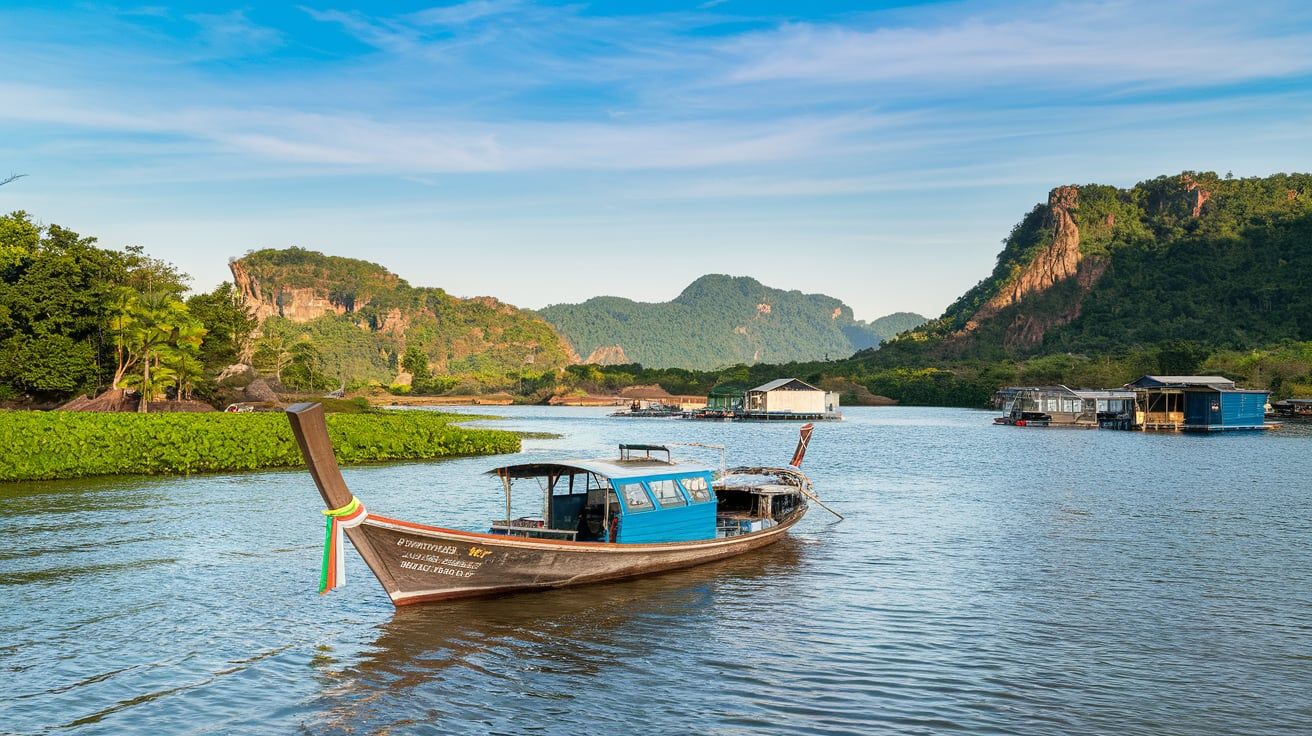
Thailand shares borders with Cambodia, Laos, Myanmar and Malaysia.
More than half a million hill tribe people live in the mountainous regions of Thailand’s far north and west, an area utterly different from the hustle of crowded Bangkok and the southern holiday beaches. These chao khao (mountain people) live according to tribal laws and customs, avoiding assimilation with mainstream Thai society and 21st century standards. For about 1,600 baht (2011 prices), you can find a three day, two night trek with guide from Chiang Mai into the northern jungle villages, including an elephant ride, river journey and food. The best season for these northern adventure treks is from mid-November to March and you should only use a tour guide who speaks tribal languages. Rates and itineraries vary so shop around before booking.
Nakhon Phanom, 735 kilometres north-east of Bangkok, is famous for its Lai Rua Fai - or Illuminated Boat Festival - in which a procession of boats illuminated by tens of thousands of candles float by and burn on the waters of the Mekong River. Lai Rua Fai is held in October or early November each year.
About 20% of Thailand is covered by monsoon forest or rainforest and the tropical climate ensures a lush greenery almost everywhere.
Thailand has an exotic but endangered variety of birdlife, insects, fish and mammals such as Asiatic black bears, tigers, elephants and leopards.
There are several excellent elephant villages in Thailand, including Pattaya, Hua Hin and Chiang Mai, where tourists can learn about the country’s national mascot and enjoy a jungle elephant trek.
Hua Hin, 190 kilometres south of Bangkok on the Gulf of Thailand’s western shore, was a small fishing port for centuries until a royal prince discovered the town’s idyllic setting and built the enormous Maruekatayawan Palace on the beachfront in 1923. Considered the longest golden teak palace in the world, this architectural wonder is open for exploration by tourists. King Rama VII also built a royal summer palace in Hua Hin and a railway connected the town to Bangkok in the 1920s. Directly opposite the train station is Thailand’s first golf course, the 18 hole Royal Hua Hin. The town has a wide variety of upmarket hotels while the shoreline north of Hua Hin has seen ongoing development of boutique resorts. Hua Hin has various local beaches, plenty of bars, historic temples and shopping malls, two night markets and the annual King’s Cup Elephant Polo Tournament. Khao Sam Roi Yot (“Three Hundred Peaks”) National Park is 23 kilometres south of Hua Hin, boasting picturesque waterfalls, jungle tracks, abundant wildlife and the dazzling temple cavern of Phraya Nakhon.
Thailand travel guide … Authorities have warned of a marked increase in the number of credit cards being “skimmed” of information to make counterfeit credit and ATM cards in Phuket and other tourist resorts such as Chiang Mai and Haad Yai. One way to prevent your card being skimmed is to make sure it’s a “smart” card, and you should shield the keyboard when you enter your PIN code at ATM machines in Thailand.
Thailand travel guide … don’t make jokes of any sort about the Thai monarchy as some Thais can be deeply offended and strict laws are in place making it illegal to make any insult against the royal family. In 2007, a Swiss man was jailed for ten years for spraying paint on public portraits of the king in Chiang Mai while drunk.
Thailand travel guide … it’s impolite to touch someone’s head in Thailand and it’s also impolite to point your feet at anyone.
Thailand travel guide … In late 2006, mobile phones in Thailand switched from nine-digit mobile numbers to 10-digits. The change was brought about by adding the number 8 after the initial zero. For example, a mobile number beginning with 01 was altered to begin with 081, rendering obsolete all mobile numbers stored in mobile phones or other databases.
🗺️ Geography and Borders
Thailand 🇹🇭 shares its borders with:
- Cambodia 🇰🇭
- Laos 🇱🇦
- Myanmar 🇲🇲
- Malaysia 🇲🇾
🏔️ Hill Tribes of Northern Thailand
Over 500,000 hill tribe people reside in Thailand’s mountainous northern and western regions. This area offers a serene contrast to bustling Bangkok and the lively southern beaches.
👥 Chao Khao (Mountain People)
- Governed by tribal laws and customs 🪶.
- Avoid assimilation with mainstream Thai society 🌄.
🥾 Trekking Adventures
- From Chiang Mai: Explore jungle villages with:
- 🚶♂️ Guided treks (3 days, 2 nights for ~1,600 baht in 2011).
- 🐘 Elephant rides.
- 🚤 River journeys.
- 🍲 Meals included.
- Best season: Mid-November to March 🍂.
- Pro tip: Choose guides who speak tribal languages 🌐.
🎇 Lai Rua Fai - Illuminated Boat Festival
Nakhon Phanom, 735 km northeast of Bangkok, hosts the enchanting Lai Rua Fai in October or early November.
- Tens of thousands of candles illuminate boats floating along the Mekong River 🕯️🌊.
- A mesmerizing cultural experience 🌟.
🌳 Thailand’s Natural Wonders
- 🌿 Rainforests: Cover about 20% of the country, offering lush greenery year-round.
- 🐅 Wildlife: Home to exotic but endangered species like:
- Asiatic black bears 🐻.
- Tigers 🐯.
- Elephants 🐘.
- Leopards 🐆.
🐘 Elephant Villages
Thailand’s national mascot, the elephant, takes center stage in:
- Pattaya 🏙️.
- Hua Hin 🌊.
- Chiang Mai 🏞️.
🐾 Activities:
- Learn about elephants and enjoy jungle treks 🚶♀️🐘.
🏖️ Hua Hin: A Coastal Gem
Located 190 km south of Bangkok, Hua Hin boasts a rich royal history and modern attractions.
🏰 Royal Legacy
- Maruekatayawan Palace:
- Built in 1923.
- The world’s longest golden teak palace 🌟.
- Summer Palace: Built by King Rama VII in the 1920s 👑.
⛳ Attractions
- Royal Hua Hin Golf Course: Thailand’s first 18-hole golf course 🎯.
- 🏨 Upmarket hotels and boutique resorts along the coast.
- Night markets 🌙, historic temples 🛕, and local beaches 🏖️.
- Khao Sam Roi Yot National Park:
- 🌊 Waterfalls.
- Jungle tracks 🌴.
- Wildlife sightings 🦜.
- The dazzling Phraya Nakhon cavern temple ✨.
🛡️ Travel Tips
-
Credit Card Safety:
- Be aware of card skimming 🎛️.
- Use “smart” cards and shield PIN entry at ATMs 🔐.
-
Respect Thai Customs:
- Avoid jokes about the monarchy 🙅♂️👑 (strict laws apply).
- Fun Fact: In 2007, a Swiss man was jailed for 10 years for vandalizing a public portrait of the king.
- Don’t touch someone’s head or point your feet at them 🚫🦶.
-
Mobile Number Changes:
- In late 2006, Thai mobile numbers added an 8 after the initial zero 📱.
- Example: A number starting with 01 became 081.
Thailand’s blend of cultural heritage 🏯, natural beauty 🌴, and warm hospitality 🌞 makes it an unforgettable travel destination.